
UNESCO International Year of Quantum Symposium
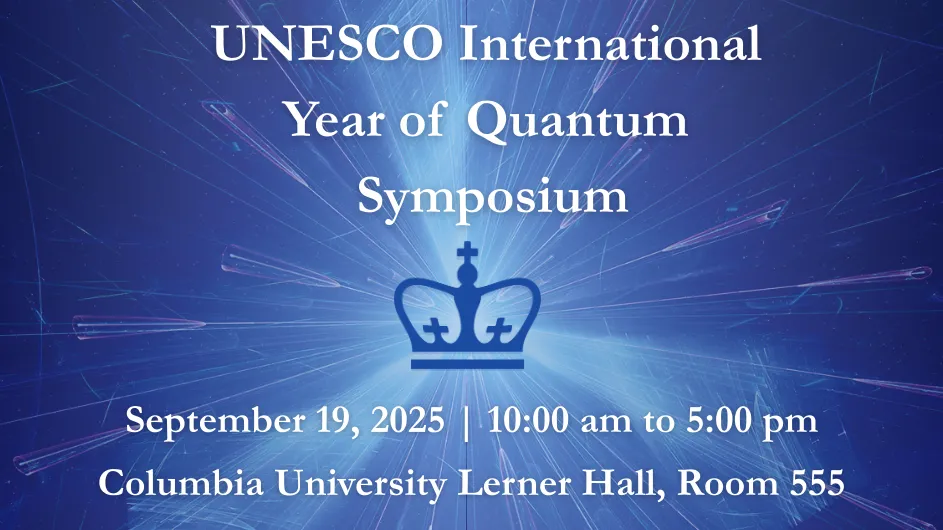
On June 7, 2024, the United Nations proclaimed 2025 as the International Year of Quantum Science and Technology (IYQ), marking 100 years since the initial development of quantum mechanics.
Join us on Friday, September 19, to welcome experts from industry and academia who will share their insights into recent quantum research and the development of emerging quantum technologies.
Symposium Schedule:
10:00 AM: Mario Motta, IBM. "The Path to Useful Quantum Computing: From Algorithms to Applications"
10:45 AM: Henry Yuen, Columbia. "Quantum Cryptography: A Journey from Quantum Money to Quantum Gravity"
11:15 AM: Marissa Giustina, Google DeepMind. "The Physicality of Information; the Information of Physicality"
12:00 PM: Lunch Break
1:00 PM: Chris Monroe, IonQ/Duke. "Quantum Computers: Hype and Hope"
1:45 PM: Sebastian Will, Columbia. "Pushing the Frontier of Quantum Control of Atoms and Molecules"
2:15 PM: Vladan Vuletic, MIT/QuERA. "Quantum Computing with Neutral Atoms: From Physical to Logical Qubits"
3:00 PM: Afternoon Break
3:30 PM: Ana Asenjo-Garcia, Columbia. "Emergent Behavior in a Noisy Quantum World"
4:00 PM: Mihai Vidrighin, PsiQuantum "Linear Optical Quantum Computing with Integrated Photonics"
Campus is open to affiliate Columbia University ID (CUID) holders and approved guests only. Guest registration is now closed. Please visit the Columbia Quantum Initiative Events page or subscribe to our newsletter to learn about upcoming quantum events.
About the Speakers
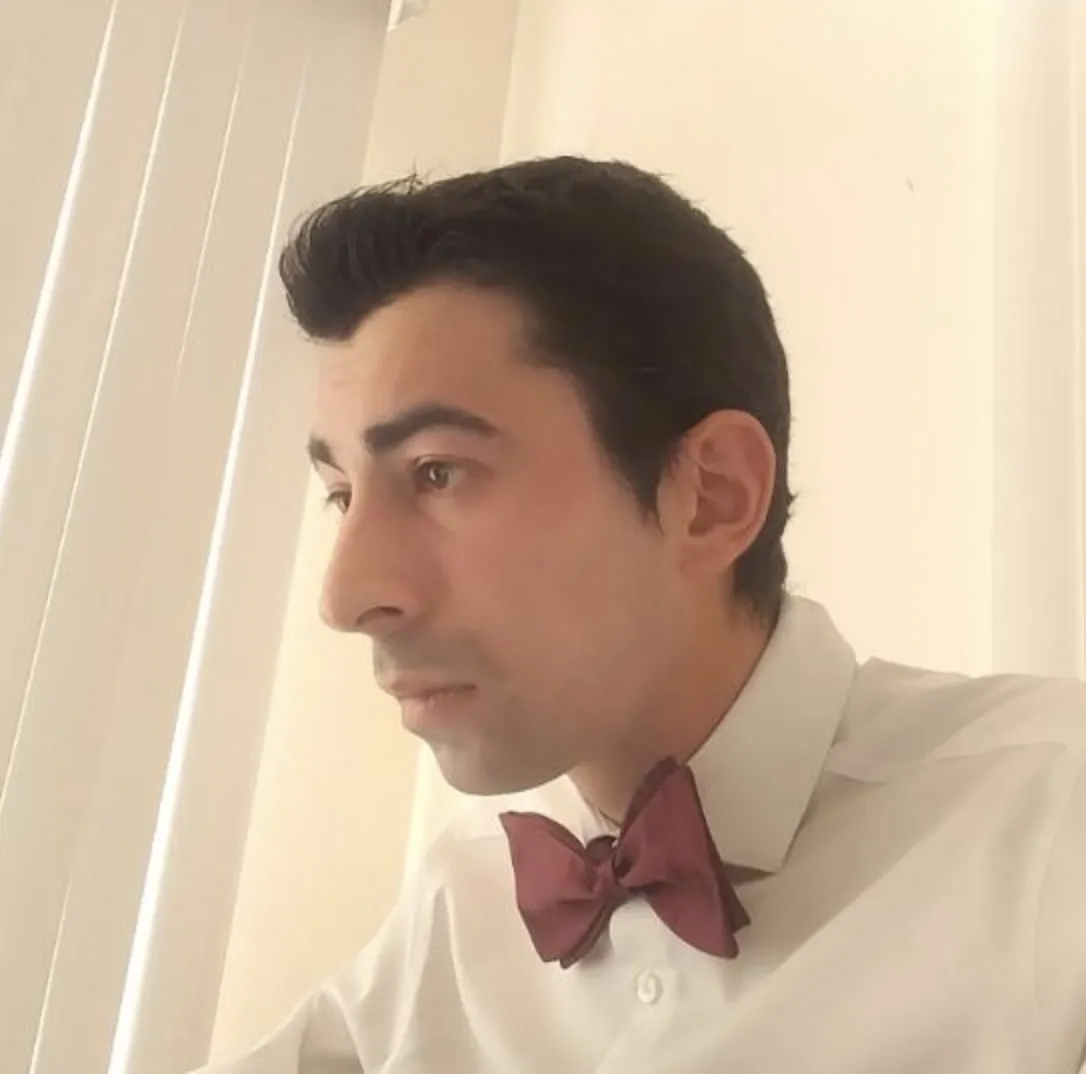
The Path to Useful Quantum Computing: From Algorithms to Applications
Bio: Mario Motta is a Principal Research Staff Member at IBM Quantum, T. J. Watson Research Center. He obtained a Ph.D. in physics in 2015 from the University of Milan (Italy). Between 2016 and 2019 he was a postdoc at William and Mary (Zhang group) and Caltech (Chan group), focused on classical and quantum algorithms for many-electron systems. He joined IBM Quantum in 2019 (Almaden Research Center 2019-2023, T. J. Watson Research Center 2024-present), working on quantum algorithms for electronic structure.
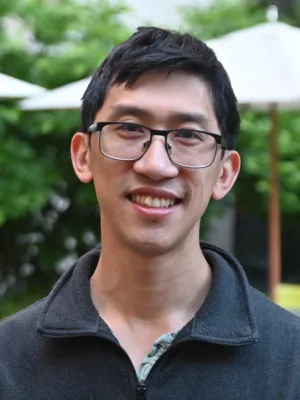
Quantum Cryptography: A Journey from Quantum Money to Quantum Gravity
Bio: Henry Yuen is the Srivani Family Associate Professor of Computer Science at Columbia University. His research focuses on the interplay between quantum computing, complexity theory, cryptography, and information theory.
Yuen received a BA in mathematics from the University of Southern California in 2010 and his PhD in computer science at MIT in 2016. He is a recipient of the NSF CAREER award and a Sloan Fellowship.
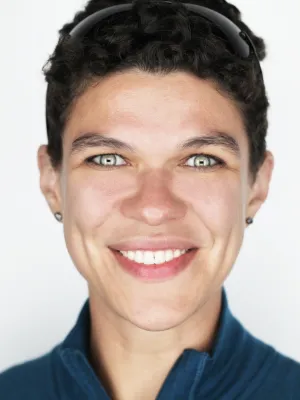
The Physicality of Information; the Information of Physicality
Bio: Marissa Giustina is a systems-minded researcher with a broad technical background. As head of device packaging and roadmap co-author in Google's Quantum Computing team, Giustina has been responsible for both research and engineering developments that enabled the unprecedentedly capable “quantum supreme” Sycamore processor and paved the way to subsequent hardware generations. Previously, Giustina designed and built a 60-meter-long precision apparatus in the sub-basement of a Vienna castle. The “loophole-free” experiment testing Bell’s inequality used entangled optical photons and superconducting optical TES detectors through a collaboration across six institutions. Currently, Giustina's research considers the intersection of robotics and Artificial Intelligence.
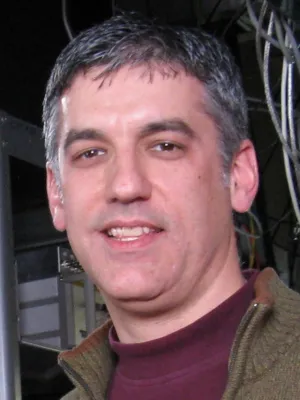
Quantum Computers: Hype and Hope
Bio: Christopher Monroe is the Gilhuly Family Presidential Distinguished Professor of Electrical and Computer Engineering and Physics at Duke University. He is also the Co-Founder and Chief Scientist of IonQ, Inc., the first public quantum computing company. Monroe has pioneered nearly all aspects of atom-based quantum computers and simulators, from demonstrations of the first quantum gate, monolithic semiconductor-chip ion trap, and photonic interconnects between physically separated qubits; to the design, fabrication, and use of full-stack ion trap quantum computer systems in both university and industrial settings.
He is a key architect of the US National Quantum Initiative, a Fellow of the American Physical Society, Optical Society of America, the UK Institute of Physics, the American Association for the Advancement of Science, and is a member of the National Academy of Sciences.
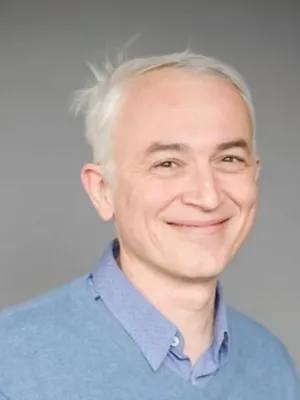
Quantum Computing With Neutral Atoms: From Physical to Logical Qubits
Bio: Vladan Vuletić is the Lester Wolfe Professor of Physics at MIT. He was born in Pec, Serbia, Yugoslavia, and educated in Germany. In 1992, he earned a Physics Diploma from the Ludwig-Maximilians-Universität München, and in 1997, a Ph.D. in Physics from the same institution. He then went on to work with Professor Steven Chu at Stanford University as a Lynen Fellow of the Humboldt Foundation. In 2000, he was appointed an Assistant Professor in the Department of Physics at Stanford and in June 2003 accepted an Assistant Professorship in Physics at MIT. He was promoted to Associate Professor in July 2004, and to Full Professor in July 2011.
Vuletic is a Fellow of the American Physical Society (APS) (2012) and the American Association for the Advancement of Science (2024), and a Foreign Member of the Serbian Academy of Sciences and Arts. Awards include a 2003 Alfred P. Sloan Research Fellowship, the Marko Jarić Prize of Serbia in 2013, and the Arthur Schawlow Prize of the APS in 2025.
Vuletic is a co-founder of the quantum computing company Quera Computing Inc. Professor Vuletic’s research includes precision measurements, large-scale quantum entanglement, quantum optics, quantum simulation, and quantum computing.
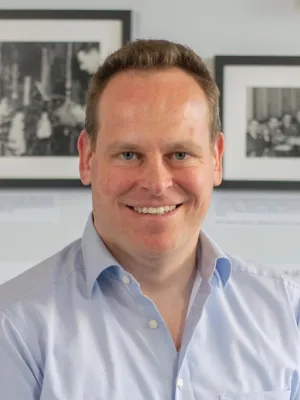
Pushing the Frontier of Quantum Control of Atoms and Molecules
Bio: Sebastian Will is an Associate Professor of Physics at Columbia University. His research focuses on ultracold atoms and molecules for applications in fundamental science, quantum simulation, quantum computing, and quantum networking. Sebastian is the recipient of the Columbia RISE Award, the NSF Career Award, and the Sloan Fellowship. His research is supported by NSF, AFOSR, ARO, ONR, DOE, and the Gordon and Betty Moore Foundation.
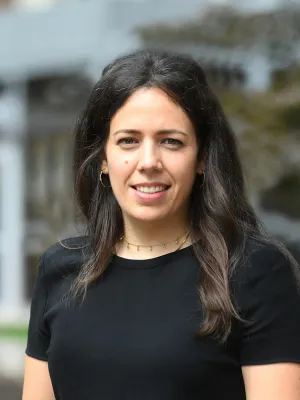
Emergent Behavior in a Noisy Quantum World
Bio: Ana Asenjo-Garcia is an Associate Professor of Physics at Columbia University. Her research focus is on theoretical quantum optics and its intersection with many-body physics and quantum information science. She has been recognized with a Packard Fellowship, a Sloan Fellowship, the IUPAP Early Career Scientist Prize in AMO Physics, the NSF CAREER Award and the AFOSR Young Investigator Prize.
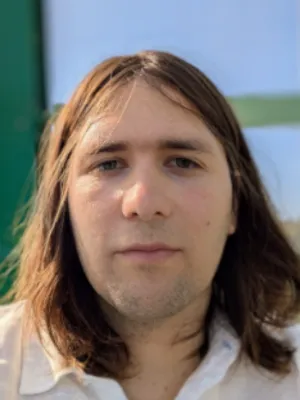
Linear Optical Quantum Computing with Integrated Photonics
Bio: Mihai Vidrighin received his PhD from Imperial College London's Controlled Quantum Dynamics Doctoral Training Center. His thesis was in experimental quantum optics, focusing on parameter estimation with nonclassical states of light, single photon homodyne measurements, and the modeling and characterization of high-gain spontaneous photon-pair generation.
After a short postdoc at Oxford University, Mihai joined PsiQuantum, where he led the development of a manufacturable, high-performance photon-pair source in integrated photonics. Mihai and his colleagues developed novel physics modelling and characterization tools. By co-developing device designs and integrated photonics processes, they produced and validated quantum photonics devices that match the extreme performance and scalability requirements of linear optical quantum computing.
Mihai is currently the VP of Photonic Circuits at PsiQuantum. He leads the design and characterization of integrated photonics chips that implement every functionality in PsiQuantum's modular linear optical quantum computing architecture.