
Columbia Quantum Initiative Impact Report: July 2023 to June 2025
View and save a PDF version of the report here
Statistics & Highlights from July 2023 to June 2025
Our People
- 30 core faculty members with expertise in quantum physics and chemistry, photonics, materials science and engineering, and quantum computing
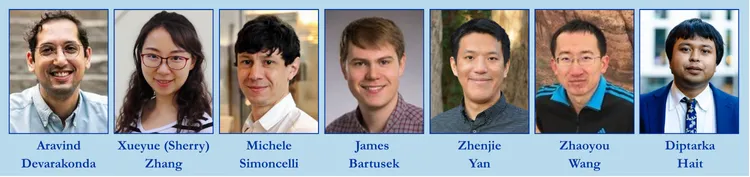
- Seven new hires:
Our Awards & Honors:
2023 Nobel Prize in Chemistry for Quantum Dots
+ Inductions to the National Academy of Sciences, the National Academy of Engineering, and the American Academy of Arts & Sciences
+ Early Career Awards from the Department of Energy and National Science Foundation
+ Fellowships from the Sloan Foundation, Beckman Foundation, Brown Institute for Basic Sciences, and more
The Next Generation:
+ 42 PhD students graduated in 2024 and 2025
+ 16 students joined Columbia’s inaugural Master’s in Quantum Science and Technology class, with 24 incoming students enrolled for Fall 2025
+ Two Columbia Quantum Initiative Postdoctoral Fellows joined dozens of others advancing quantum research
+ Hundreds of students from Columbia, Barnard, and those elected to undergraduate research experience programs have been exposed to the latest quantum research
Our Research
+ 99 active research grants totaling almost $97 million, with approximately $37.5 million awarded between July 2023 and June 2025
+ 62 new patents filed
+ 201 senior-author research and review papers, including eight in Science and four in Nature, that have received nearly 1500 citations, with contributions to an additional 165 publications between July 2023 and June 2025
Quantum Centers include:
+ Department of Energy Energy Frontier Research Center on Programmable Quantum Materials
+ National Science Foundation Materials Research and Science Engineering Center on Precision-Assembled Quantum Materials
+ Max Planck-New York Center on Non-equilibrium Quantum Phenomena
+ National Science Foundation National Virtual Quantum Laboratory
+ Columbia Center for Computational Electrochemistry
Highlighted News
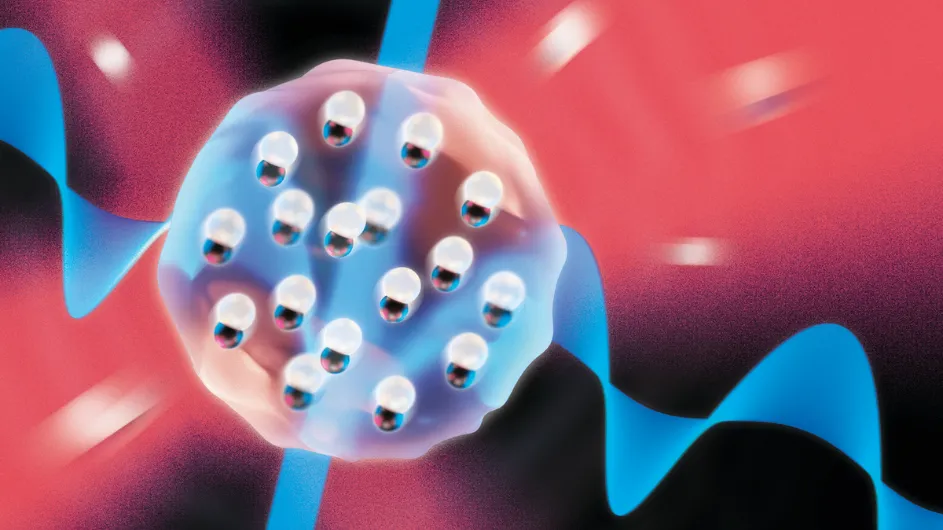
The Coldest Lab in New York Has a New Quantum Offering | Columbia physicists have taken molecules to a new ultracold limit and created a state of matter where quantum mechanics reigns.
Looking for New Physics? Try a Bad Metal | Bad metals have unique electronic properties that make them a good place to look for elusive quantum particles.
Columbia Chemists Create First 2D Heavy Fermion | The layered crystal, CeSiI, with heavier-than-normal electrons is a new platform to explore quantum phenomena.
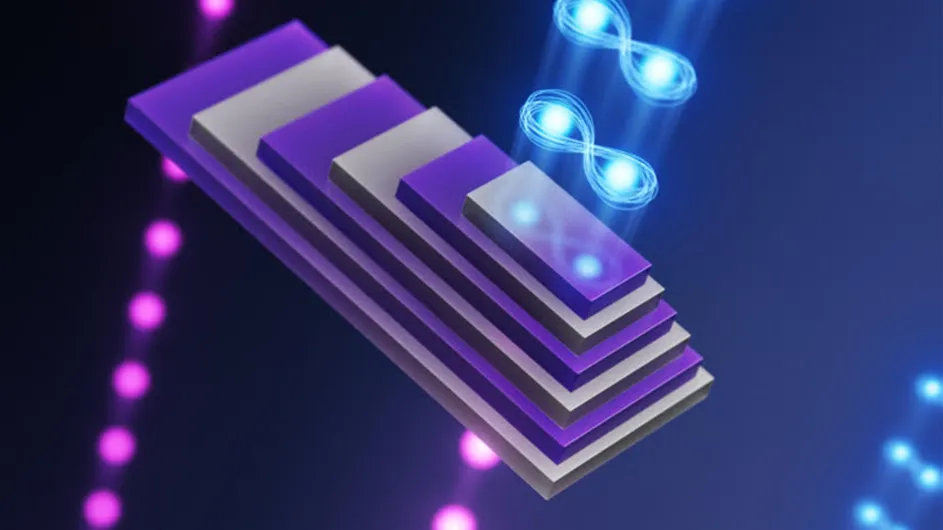
Engineering Quantum Entanglement at the Nanoscale | Columbia engineers have developed a drastically smaller and more energy-efficient method of creating coveted photon pairs that influence each other from any distance.
Max Planck-New York Center on Non-Equilibrium Quantum Phenomena Renewed | The quantum research center will continue its international collaboration for an additional five years with Cornell University as a new partner institution.
High-Quality Microwave Signals Generated From Tiny Photonic Chip | Columbia engineers create a compact, all-optical device with the lowest microwave noise ever achieved for an integrated chip.
New “All-optical” Nanoscale Sensors of Force | Photon-avalanching nanosensors access previously unreachable environments and could disrupt technologies from robotics to cellular biophysics & medicine to space travel.
Searching for Unorthodox Improvements to Quantum Systems | Professor Sherry Zhang is working on new approaches to enhance quantum computing performance.
Graphene Gets Cleaned Up | Columbia engineers link oxygen to graphene quality and develop new techniques to reproducibly make the wonder material at scale.
It’s a Quantum Zoo Out There, and Columbia Just Discovered a Dozen New “Species” | Researchers observe over a dozen never-before-seen quantum states in a unique quantum material.