
2025 Recap from Columbia Quantum's Highly Cited Researchers
Six Columbia Quantum Initiative researchers made Clarivate’s Highly Cited Researcher list this year. Here are a few of their highlights from 2025.
Dmitri Basov: Good plasmons in a bad metal
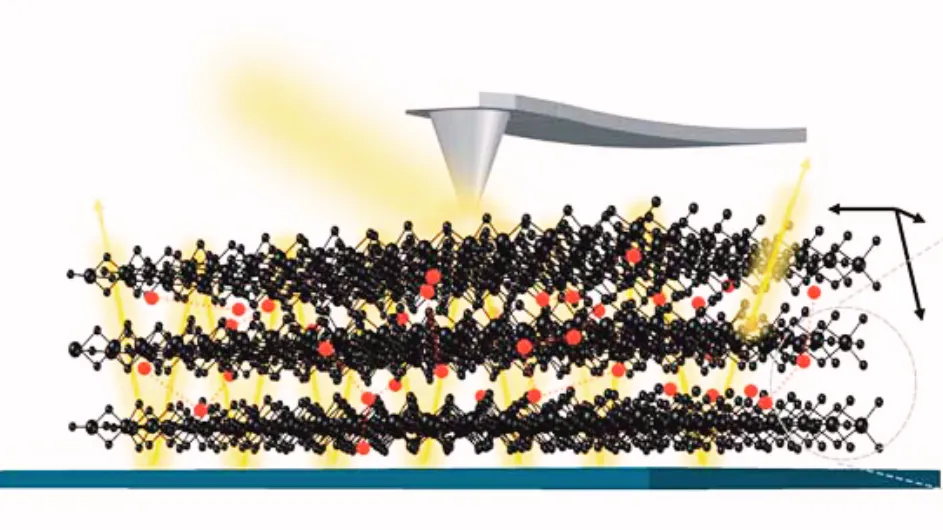
Abstract: Correlated metals may exhibit unusually high resistivity that increases linearly in temperature, breaking through the Mott-Ioffe-Regel bound, above which coherent quasiparticles are destroyed. The fate of collective charge excitations, or plasmons, in these systems is a subject of debate. Several studies have suggested that plasmons are overdamped, whereas other studies have detected propagating plasmons. In this work, we present direct nano-optical images of low-loss hyperbolic plasmon polaritons (HPPs) in the correlated van der Waals metal MoOCl2. HPPs are plasmon-photon modes that waveguide through extremely anisotropic media and are remarkably long-lived in MoOCl2. Photoemission data presented here reveal a highly anisotropic Fermi surface, reconstructed and made partly incoherent, likely through electronic interactions as explained by many-body theory. HPPs remain long-lived despite this, revealing previously unseen imprints of many-body effects on plasmonic collective modes.
This work was published in Science in February.
Cory Dean: Superconductivity in 5.0° twisted bilayer WSe2

Abstract: The discovery of superconductivity in twisted bilayer and trilayer graphene has generated tremendous interest. The key feature of these systems is an interplay between interlayer coupling and a moiré superlattice that gives rise to low-energy flat bands with strong correlations. Flat bands can also be induced by moiré patterns in lattice-mismatched and/or twisted heterostructures of other two-dimensional materials, such as transition metal dichalcogenides (TMDs). Although a wide range of correlated phenomena have indeed been observed in moiré TMDs, robust demonstration of superconductivity has remained absent. Here we report superconductivity in 5.0° twisted bilayer WSe2 with a maximum critical temperature of 426 mK. The superconducting state appears in a limited region of displacement field and density that is adjacent to a metallic state with a Fermi surface reconstruction believed to arise from AFM order. A sharp boundary is observed between the superconducting and magnetic phases at low temperature, reminiscent of spin fluctuation-mediated superconductivity. Our results establish that moiré flat-band superconductivity extends beyond graphene structures. Material properties that are absent in graphene but intrinsic among TMDs, such as a native band gap, large spin–orbit coupling, spin-valley locking and magnetism, offer the possibility of accessing a broader superconducting parameter space than graphene-only structures.
This work was published in Nature in January.
Alexander Gaeta: Frequency-stable nanophotonic microcavities via integrated thermometry
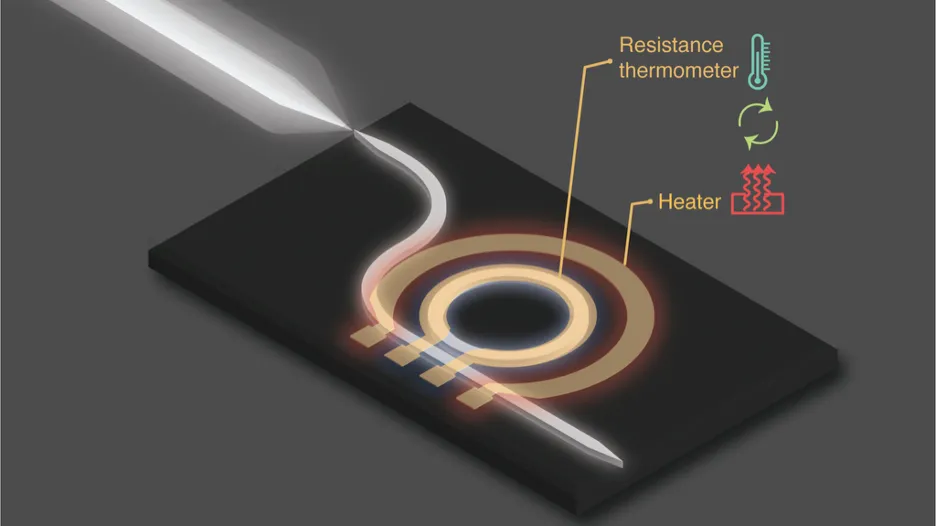
Abstract: Field-deployable integrated photonic devices co-packaged with electronics will enable important applications such as optical interconnects, quantum information processing, precision measurements, spectroscopy and microwave generation. Significant progress has been made over the past two decades on increasing the functional complexity of photonic chips. However, a critical challenge that remains is the lack of scalable techniques to overcome thermal perturbations arising from the environment and co-packaged electronics. Here we demonstrate a fully integrated scheme to monitor and stabilize the temperature of a high-Q microresonator on a Si-based chip, which can serve as a photonic frequency reference. Our approach relies on a thin-film metallic resistor placed directly above the microcavity, acting as an integrated resistance thermometer, enabling unique mapping of the cavity’s absolute resonance wavelength to the thermometer’s electrical resistance. Following a one-time calibration, the microresonator can be accurately and repeatably tuned to any desired absolute resonance wavelength using thermometry alone with a root-mean-squared wavelength error of <0.8 pm over a time span of days. We frequency-lock a distributed feedback laser to the microresonator and demonstrate a 48× reduction in its frequency drift, resulting in its centre wavelength staying within ±0.5 pm of the mean over a duration of 50 h in the presence of substantial ambient fluctuations, outperforming many commercial distributed feedback and wavelength-locker-based laser systems. Finally, we stabilize a soliton mode-locked Kerr comb without the need for photodetection, paving the way for Kerr-comb-based photonic devices that can potentially operate in the desired mode-locked state indefinitely.
This paper was published in Nature Photonics in November.
James Hone: Crystalline superconductor-semiconductor Josephson junctions for compact superconducting qubits
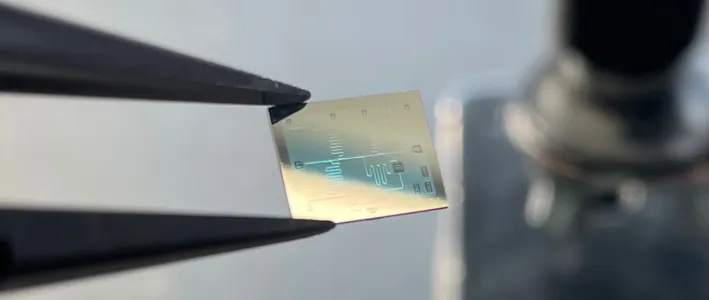
Abstract: The narrow band gaps of semiconductors allow for thick, uniform Josephson junction barriers, potentially enabling reproducible, stable, and compact superconducting qubits. We study vertically stacked van der Waals Josephson junctions with semiconducting weak links, whose crystalline structures and clean interfaces offer a promising platform for quantum devices. We observe robust Josephson coupling across 2–12 nm (3–18 atomic layers) of semiconducting WSe2 and, notably, a crossover from proximity- to tunneling-type behavior with increasing weak-link thickness. Building on these results, we fabricate a prototype all-crystalline merged-element transmon qubit with transmon frequency and anharmonicity closely matching design parameters. We demonstrate dispersive coupling between this transmon and a microwave resonator, highlighting the potential of crystalline superconductor-semiconductor structures for compact, tailored superconducting quantum devices
This paper was published in Physical Review Applied in September.
Michal Lipson: High-power electrically pumped microcombs
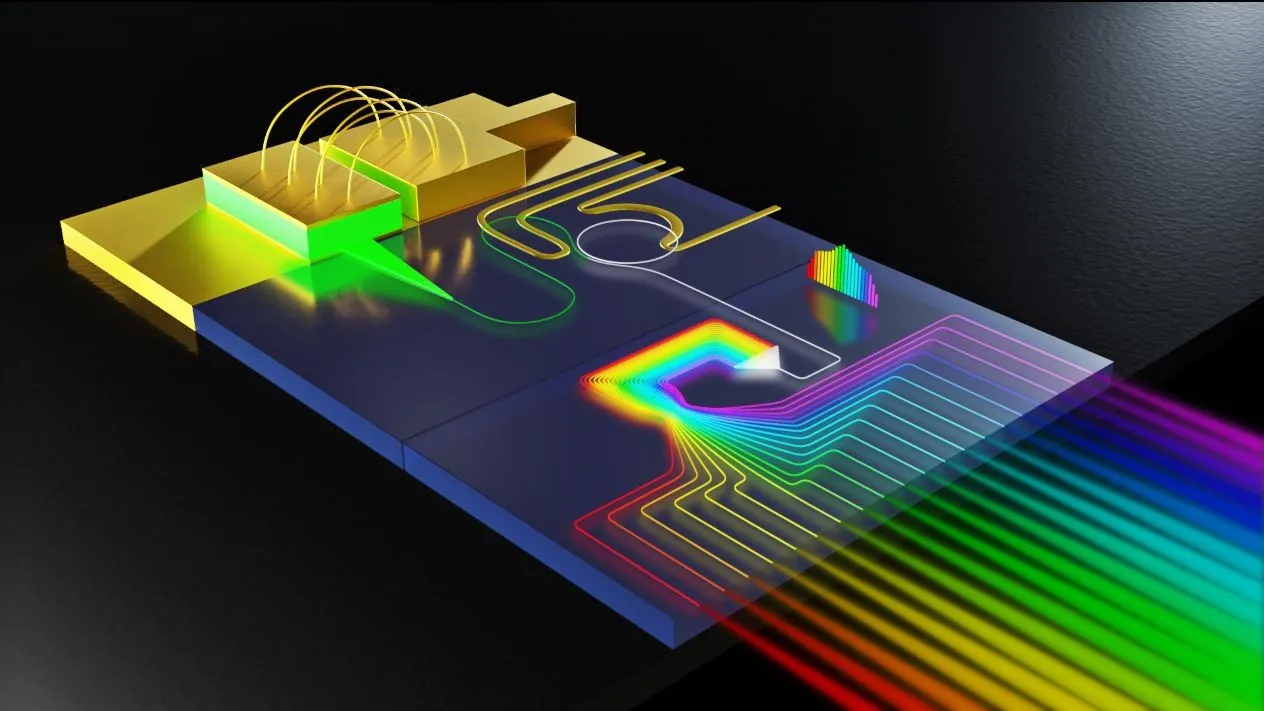
Abstract: Integrated microcombs are promising for numerous applications that require a small footprint, high output power and high efficiency, such as data communications, sensing and spectroscopy. Electrically pumped microcombs have been recently demonstrated via the integration of gain chips with high-quality-factor integrated resonators. However, the overall optical power remains well below what is necessary for practical solutions. Here we demonstrate high-power electrically pumped Kerr-frequency microcombs by integrating a low-coherence source with high output power and silicon nitride ring resonators. We design the resonators with normal group velocity dispersion and leverage self-injection locking in the nonlinear regime for generating high on-chip power combs whereas, simultaneously, purifying the coherence of the pump source. We show microcombs with total on-chip power levels up to 158 mW and comb lines with an intrinsic linewidth as narrow as 200 kHz. We demonstrate more than twice the number of comb lines exceeding 100 μW and an order-of-magnitude higher on-chip power levels compared with previously reported results. Our novel electrically pumped microcomb source has the size, power and linewidth required for data communications, and could strongly impact other areas such as high-performance computing and ubiquitous devices for spectral-sensing and time-keeping applications.
This paper was published in Nature Photonics in October.
Xiaoyang Zhu: Hidden states and dynamics of fractional fillings in twisted MoTe2 bilayers
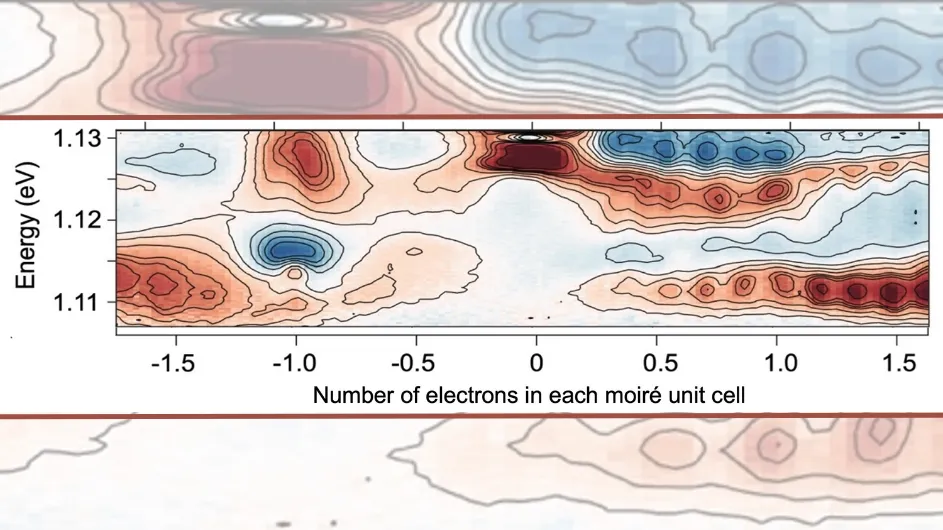
Abstract: The fractional quantum anomalous Hall (FQAH) effect was recently discovered in twisted MoTe2 (tMoTe2) bilayers. Experiments so far have revealed Chern insulators from hole doping at ν = −1, −2/3, −3/5 and −4/7 (per moiré unit cell). In parallel, theories predict that, between v = −1 and −3, there exist exotic quantum phases, such as the coveted fractional topological insulators, fractional quantum spin Hall (FQSH) states and non-Abelian fractional states. Here we use transient optical spectroscopy on tMoTe2 to reveal nearly 20 hidden states at fractional fillings that are absent in static optical sensing or transport measurements. A pump pulse selectively excites charge across the correlated or pseudogaps, leading to the disordering (melting) of correlated states. A probe pulse detects the subsequent melting and recovery dynamics by means of exciton and trion sensing. Besides the known states, we observe further fractional fillings between ν = 0 and −1 and a large number of states on the electron doping side (ν > 0). Most importantly, we observe new states at fractional fillings of the Chern bands at ν = −4/3, −3/2, −5/3, −7/3, −5/2 and −8/3. These states are potential candidates for the predicted exotic topological phases. Moreover, we show that melting of correlated states occurs on two distinct timescales, 2–4 ps and 180–270 ps, attributed to electronic and phonon mechanisms, respectively. We discuss the differing dynamics of the electron-doped and hole-doped states from the distinct moiré conduction and valence bands.