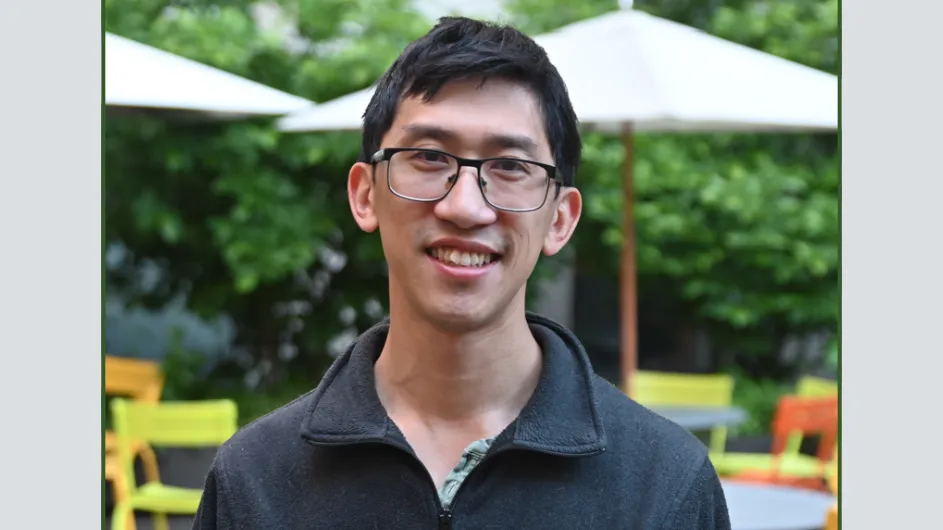
Henry Yuen, Srivani Professor of Computer Science at Columbia Engineering, and Ruben Verresen, assistant professor of molecular engineering at the University of Chicago Pritzker School of Molecular Engineering, have been recognized by the 2026 Microsoft Quantum Pioneers Program. One of five winning teams in the program’s software track this year, they will each receive $100,000 to explore adaptive computation on the company’s measurement-based topological hardware.
“Progress in quantum computing depends on advances that work together. New physical devices need reliable measurement and control; error-correcting codes need practical implementations; and algorithms need to make effective use of the resources available. Research collaborations bring complementary expertise to these connected challenges,” Microsoft noted in its press release announcing this year’s cohort of researchers.
Yuen investigates key problems at the intersection of quantum information theory, computational complexity, and cryptography, while Verresen explores the theory behind the quantum entangled states that make quantum computing possible. Although Yuen is a computer scientist and Verresen is a theoretical physicist, they discovered they were both fascinated by the same questions about the ability of quantum computers to create exotic quantum states at a 2025 conference at KITP in Santa Barbara.
The central idea of their collaborative Microsoft project is that measuring a quantum system can be part of the computation itself. Each measurement changes the quantum system, and a classical computer uses those results to decide what to measure next. This back-and-forth lets quantum and classical computers work together. "Our goal is to discover just how effectively near-term quantum computers and classical computers can work together to solve hard problems,” said Yuen.
Yuen and Verresen’s project will explore two main areas:
- How much can be accomplished with the hardware’s simplest measurements, and when are additional but costly quantum resources needed?
- Can smarter processing on the ordinary computer help the same quantum hardware accomplish more?
These questions are of fundamental scientific interest, and also motivated by Microsoft’s topological quantum computing approach and its Majorana quantum processors. “We want to understand both the possibilities and the limits of this approach, so we can guide how future quantum computers are programmed and used,” said Yuen. “We hope this research can help inform the quantum industry on what can be done with this nascent technology.”