
Capitalizing on Quantum
Learn more about the companies launched from the labs of CQI faculty members:
Tessellate 2D produces pristine, single-layer semiconductor materials designed to extend performance scaling for future computing technology.
It was founded in 2025 by Columbia graduate students Nick Olsen and Luke Holtzman and is based on techniques developed in the labs of James Hone, Wang Fong-Jen Professor of Mechanical Engineering, Xiaoyang Zhu, Howard Family Professor of Nanoscience in the Department of Chemistry, and the late Katayun Barmak, Philips Electronics Professor of Applied Physics and Applied Mathematics.
Xscape Photonics delivers photonic architecture to power next-generation hardware for agentic artificial intelligence.
It was founded in 2022 by Columbia researchers Alexander Gaeta, David M. Rickey Professor of Applied Physics and Materials Science and Professor of Electrical Engineering; Gaeta’s research scientist Yoshi Okawachi; Keren Bergman, Charles Batchelor Professor of Electrical Engineering and Scientific Director of the Columbia Nano Initiative; and Michal Lipson Higgins Professor of Electrical Engineering and Professor of Applied Physics, with Vivek Raghunathan.
LEGIT’s vision is to become a global frontrunner in optical microendoscopy, pioneering innovative solutions that redefine the current landscape of optical microscopy technology.
It was founded in 2020 by Mohammad Amin Tadayon, a postdoctoral research scientist who worked with Michal Lipson, Higgins Professor of Electrical Engineering and Professor of Applied Physics.
XL Batteries is scaling the world’s lowest-cost, safest, and most efficient long-duration energy storage solution.
It was founded in 2019 using technology developed in the lab of Colin Nuckols, Sheldon and Dorothy Buckler Professor of Material Science in the Department of Chemistry at Columbia.
Voyant Photonics delivers silicon photonics solutions for optical communications, intelligent machine perception, and industrial sensing and provides high-reliability, solid-state, software-configurable solutions that are mass-producible and ready for the field.
It was founded in 2017 by Cornell University graduate students Steven Miller and Chris Phare, who studied nanophotonics with Michal Lipson, Higgins Professor of Electrical Engineering and Professor of Applied Physics at Columbia.
Schrödinger’s computational platform, powered by physics, is transforming the way therapeutics and materials are discovered to make innovations of the future achievable, today.
It was founded in 1990 by Richard Friesner, William P. Schweitzer Professor of Chemistry at Columbia, and William Andrew Goddard III, Charles and Mary Ferkel Professor of Chemistry and Applied Physics and director of the Materials and Process Simulation Center at the California Institute of Technology.
News Highlights
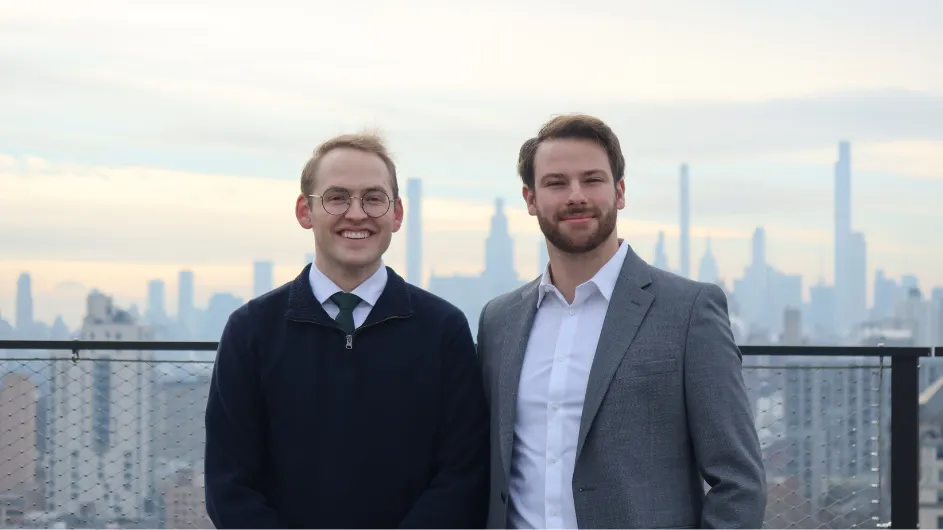
Graduate students Nick Olsen and Luke Holtzman launched Tessellate 2D to produce 2D semiconductors at scale.
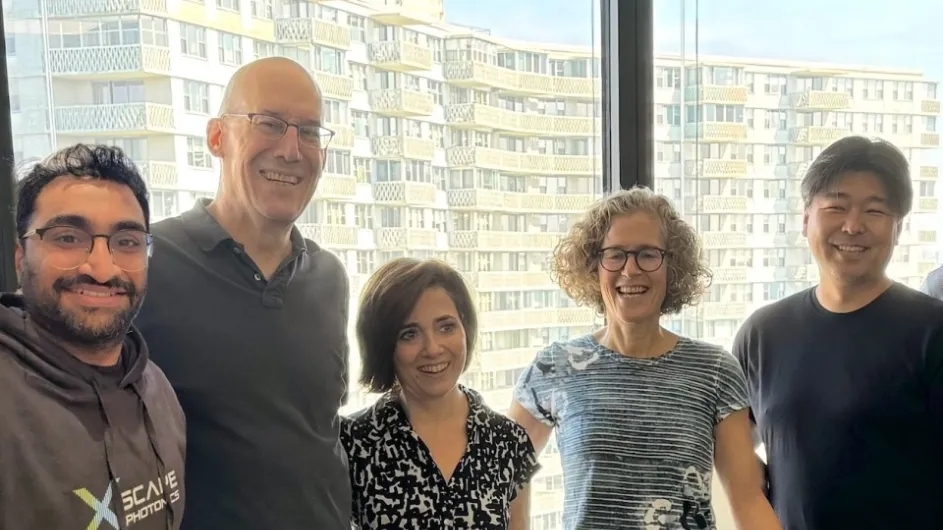
A Columbia Engineering startup nabs $44M to tackle energy and scalability challenges with a new platform that significantly boosts AI data performance and efficiency.