
Columbia Researchers Can Now Watch Individual Quantum Particles In Motion
The latest version of Milan Delor’s stroboSCAT microscope can distinguish single quantum states as they flow through materials.
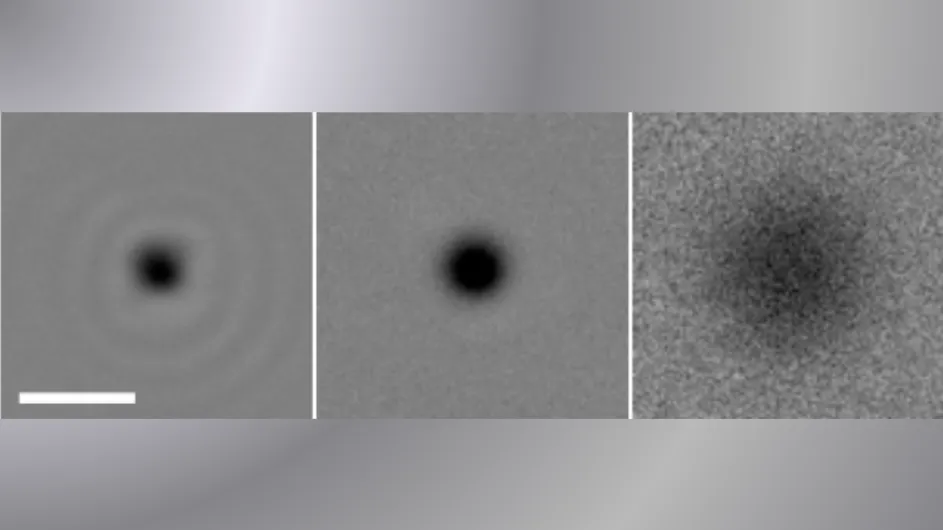
Energy can be carried in a number of ways: by electrons, the particles that underpin all modern electronics, as well as by quasiparticles, the results of different particles interacting with one another at the quantum level. Columbia chemist Milan Delor has been watching these different forms of energy flow with an instrument called stroboSCAT, a unique microscope that uses strobe-like light pulses to capture particles and quasiparticles as they move through different materials.
The latest iteration of stroboSCAT, described in Nature Materials, can now resolve individual quantum energy carriers as they move through materials for the first time. It can also observe their interactions with greater precision than existing imaging techniques.
Electrons can easily be tracked using transport measurements that record electrical resistance. But such techniques cannot directly capture quasiparticles, like charge-neutral excitons or spin excitations. Delor first developed stroboSCAT as a postdoc working with Naomi Ginsberg at the University of California, Berkeley in 2019. Over the years, he and his lab at Columbia have increased its temporal resolution to femtoseconds, its spatial resolution to just a few nanometers, and deployed it to detect electrons, excitons, phonons, magnons, ferrons, photons, polaritons, and polarons in a variety of semiconductors and metals.
stroboSCAT has yielded powerful insights into the transport properties of a wide range of materials, but only at high carrier densities. Imagine dropping ink into water, Delor explained. How the droplet diffuses can reveal important details about the medium, but only up to a point. Eventually, the individual ink particles become too spread out to see anything meaningful. “That’s always been the catch,” he said. “To take single particle measurements, you need to start with a low density of carriers, but, as they move, they become lost in the noise of the measurements.”
A few years ago, a team of researchers from the University of Würzburg and the University of Ottawa published a technique for distinguishing single quantum particles by performing spectroscopic measurements at varying laser intensities. “It’s a beautiful paper, implemented in spectroscopy, but it doesn’t capture spatial information. We realized that our technique was extremely well-suited to a similar simple tweak: cycling different intensities of light to create the excitations,” Delor said. “It’s an elegant solution to a major obstacle: we can now distinguish single quantum states from many as they move through real space.”
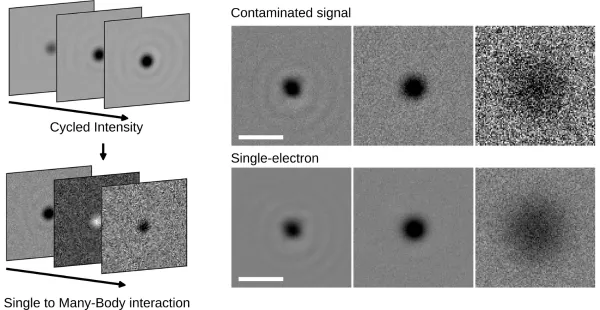
In the current Nature Materials paper, the team, led by Delor’s graduate student Jack Tulyag (GSAS ‘26), demonstrated several powerful capabilities of their intensity-cycling stroboSCAT. Most significantly for Delor, they can now isolate single electrons moving through a 2D semiconductor. “That’s a breakthrough for me. We can obtain information about transport without worrying about artifacts from many-body interactions,” he said.
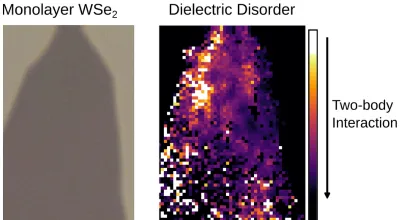
Their new technique also allowed the team to observe interactions among multiple particles with great precision. For example, they can selectively track the spatial and temporal evolution of two-particle or three-particle states. In the paper, they detail interactions between individual excitons; map how crystal defects can shape a 2D semiconductor’s electronic environment; and observe how light can force a phase transition in a superatomic solid. “These are long-sought-after capabilities that can now become routine measurements,” Delor said, noting that he is making stroboSCAT blueprints and software available and helping interested groups implement the instrument in their own labs.
At Columbia, Delor looks forward to using the latest iteration of strobooSCAT to explore particle interactions that give rise to functionally interesting phenomena, including the formation of Cooper pairs, bound electrons that give rise to superconductivity, and condensates, in which many quasiparticles sync into a shared, macroscopic quantum state.
There’s no shortage of potential collaborators at Columbia who are keen to bring their own unique quantum materials under Delor’s microscope. “What’s amazing about stroboSCAT is it’s such a general technique,” he said. “It’s remarkable that we can track all these different particles in many different materials and now, with single-particle precision.”
Read More:
The Article: Jakhangirkhodja Tulyagankhodjaev et al. Spatiotemporal Intensity-Cycling Microscopy Unveils Many-Body Interactions and Correlated Transport in van der Waals Semiconductors. Nature Materials (2026). DOI: 10.1038/s41563-026-02800-6
News & Views: Pavel Malý. Imaging Multi-Particle Dynamics in Space and Time. Nature Materials (2026). DOI: 10.1038/s41563-026-02785-2