

Columbia postdoc Brian Kim combines engineering and physics to advance research into the atom-thin world of 2D materials.
A new class of integrated nanophotonic devices, based on leaky-wave metasurfaces, simultaneously controls all four optical degrees of freedom: amplitude, phase, polarization ellipticity, and polarization orientation.
On June 7, 2023, Columbia Center on Global Energy Policy Distinguished Visiting Fellow Paul Dabbar testified before the U.S. House Science, Space, and Technology Committee. An archived video of the hearing is available here.
Lawmakers are gearing up to expand a bipartisan quantum research and development effort aimed at boosting U.S. national security — and beating Beijing.
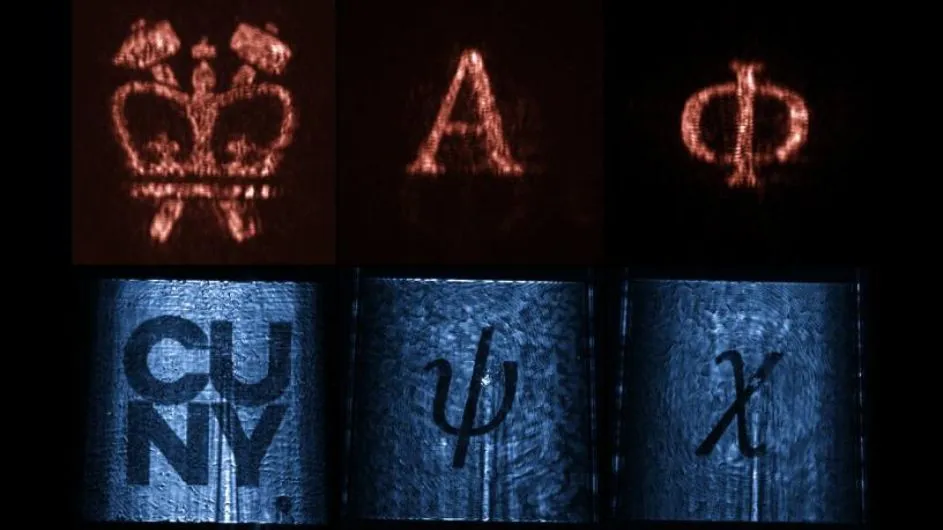
Researchers in the US have shown how light travelling through optical waveguides can be converted into freely propagating light waves with arbitrarily shaped wavefronts – an achievement that the team claims as a first. Nanfang Yu and colleagues at Columbia University and at the City University of New York (CUNY), achieved the feat using “leaky-wave metasurfaces”.
Paul Dabbar, Distinguished Visiting Fellow at the Center on Global Energy Policy (CGEP) at Columbia University SIPA and Chairman and CEO of Bohr Quantum Technologies, has been invited to testify before the House Committee on Science, Space, and Technology on Wednesday, June 7, 2023.

Scientists at Columbia Engineering, Berkeley Lab, and UNIST demonstrate that ultra-photostable avalanching nanoparticles are capable of unlimited photoswitching, lighting the way for advances in optical probes, 3D memory, and super-resolution microscopy.

Simons Junior Fellow and Columbia Postdoc Eric Arsenault works at the intersection of physics and chemistry to understand how electrons and nuclei conspire — work that may lead to future energy and device technologies.

Dipti Jasrasaria, a Columbia University postdoctoral research scientist and a 2018-2022 Department of Energy Computational Science Graduate Fellowship (DOE CSGF) recipient, has been selected as the 2023 Frederick A. Howes Scholar in Computational Science.
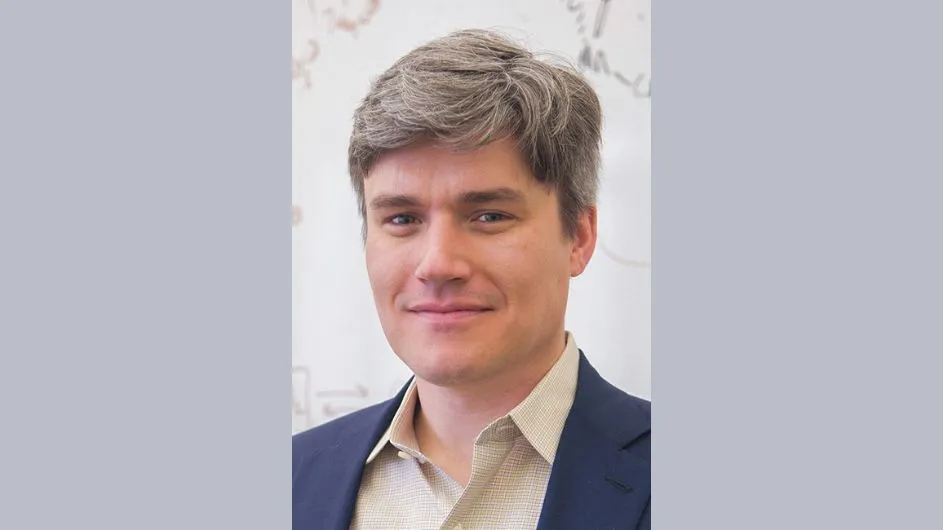
Jonathan Owen of Columbia University is the winner of the 2023 Inorganic Nanoscience Award. This award is presented by the American Chemical Society Division of Inorganic Chemistry to honor exceptional research in the area of inorganic nanoscience.

The PhD candidate in the Department of Chemistry is one of 39 fellows in this year's class.
New class of integrated nanophotonic devices—a world record in simultaneous control of all four optical degrees of freedom—can convert light initially confined in an optical waveguide to an arbitrary optical pattern in free space.