
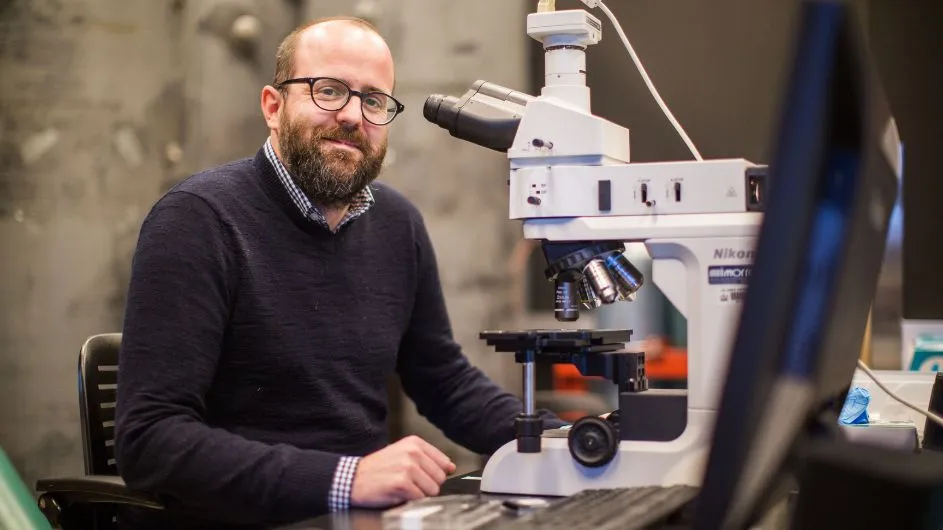
Physicist Cory Dean, recipient of a 2023 Brown Investigator Award, will explore new ways to modify quantum materials.
Congratulations to graduating senior Jaylyn Umana and incoming PhD student Sophia Wolczko!
Dean, a physicist studying the electronic properties of quantum materials, is one of seven mid-career scientists recognized this year.
A team at Columbia University and University of Warsaw recently created a highly accurate molecular clock that could be used to study new physical phenomena.
A $900,000 award from the Julian Schwinger Foundation will support graduate students in the Physics Department studying theoretical and quantum physics.
Theoretical physicists Raquel Queiroz comments.
Billinge spoke with the Columbia Data Science Institute about the Materials Genome Initiative (MGI), key findings from the materials with long-range order (MLRO) workshop, and what they mean for the future of the field.
In 1949 physicist Chien-Shiung Wu devised an experiment that documented evidence of entanglement. Her findings have been hidden in plain sight for more than 70 years.
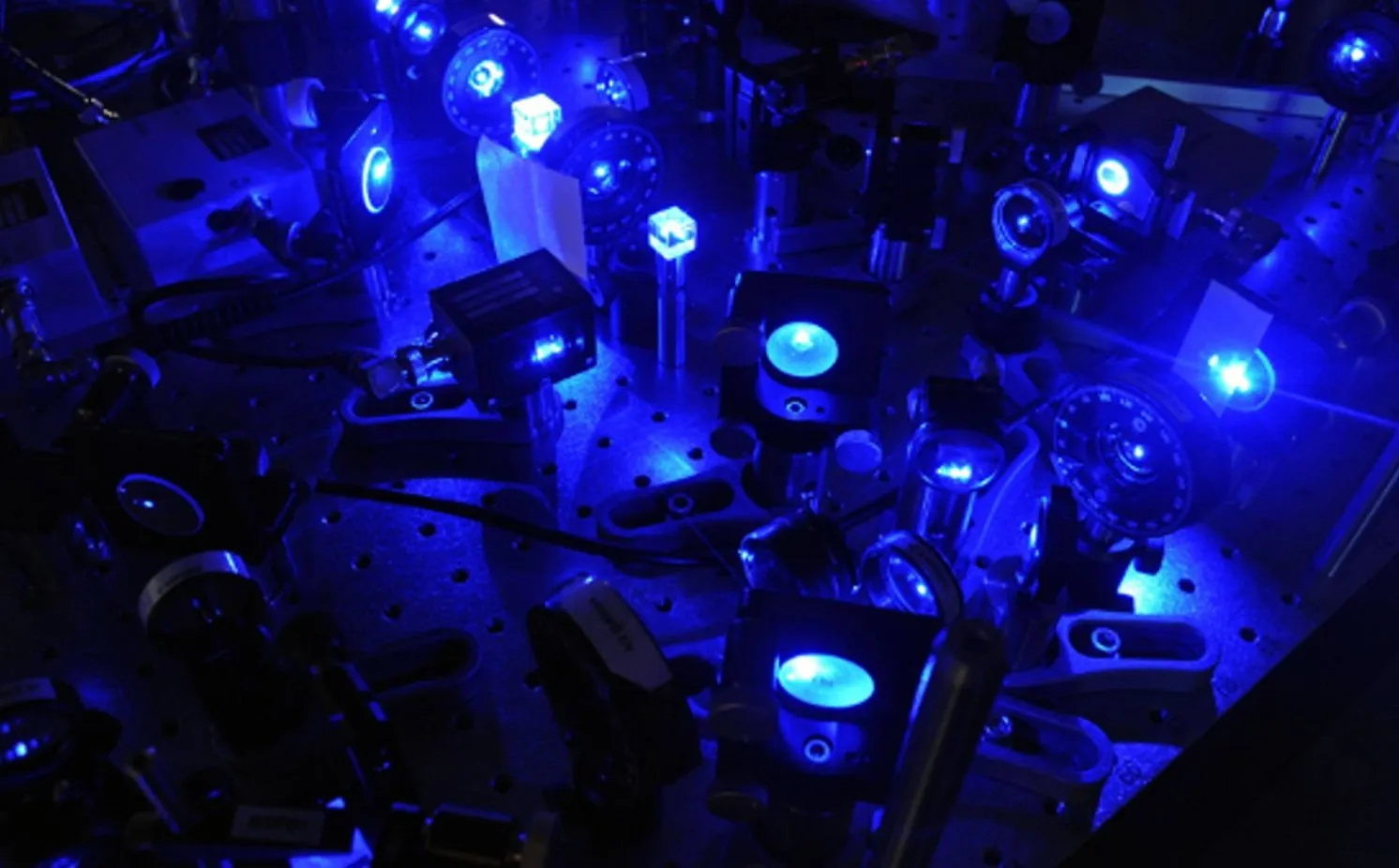
Researchers in the Zlab have attained a 100-fold increase in the accuracy of a molecular clock that could serve as a terahertz-frequency standard and as a platform for investigating new physics.
Scientists led by a team from Columbia University and the Université de Bourgogne have developed an innovative “camera” with a shutter speed of 1 trillionth of a second that can see through the dynamic disorder of atoms.
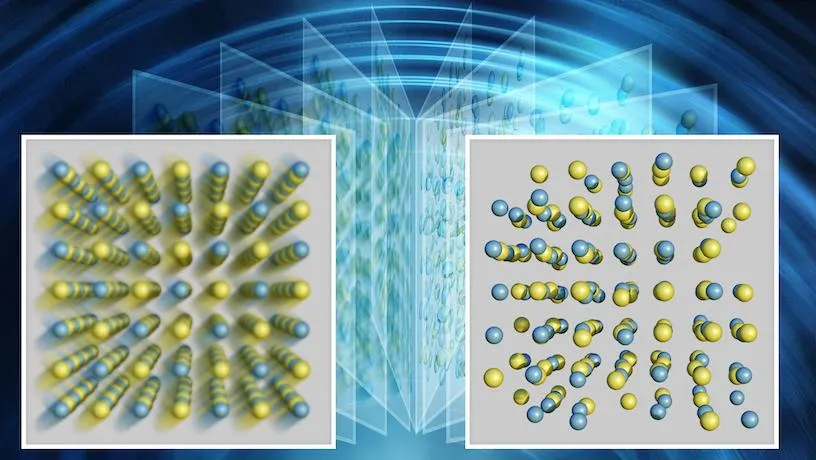
Speeding up a camera shutter a million million times enables researchers to understand how materials move heat around and is a major step in advancing sustainable energy applications.
A clock that ticks using vibrations of strontium molecules could be used to test Albert Einstein’s theory of relativity or to search for forces that have yet to be described.