
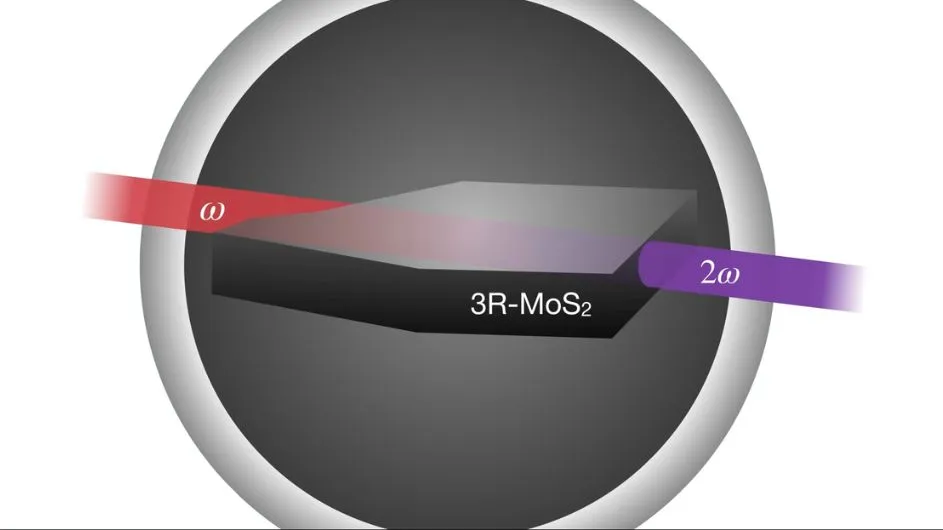
A new bidimensional semiconductor shows the highest nonlinear optical efficiency over nanometer thicknesses.

The U.S. Department of Energy renews Columbia’s Energy Frontier Research Center with a four-year $12.6 million grant.
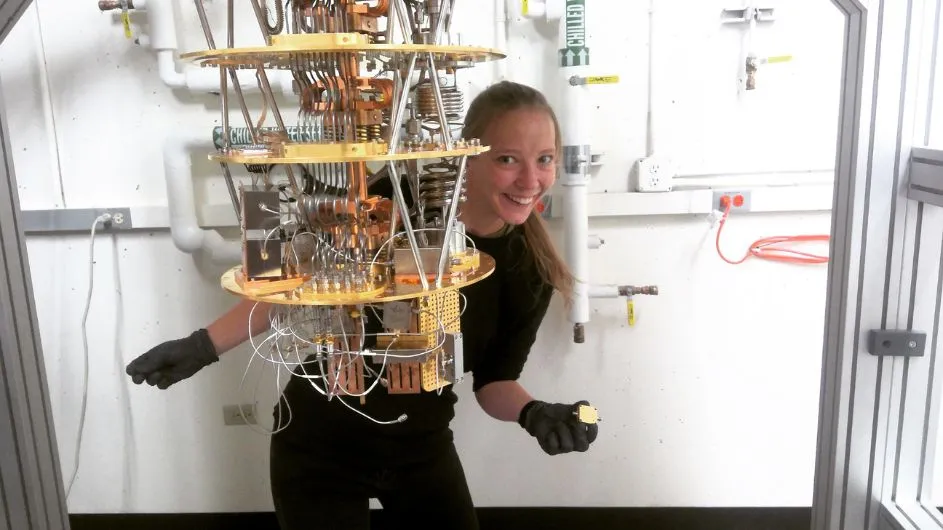
This GS’23 student did research in a quantum lab in Colorado for her summer internship.
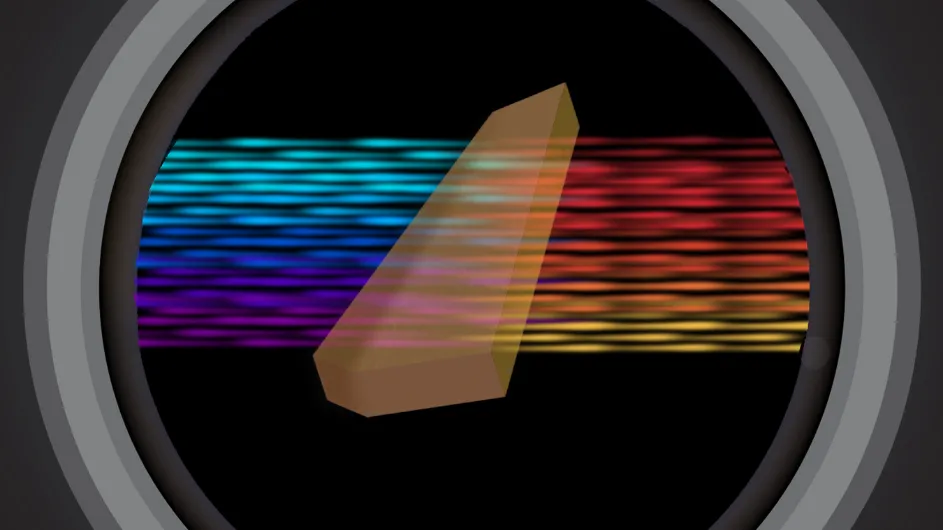
Researchers at Columbia University and Politecnico di Milano have used an atomically thin material to build a device that can change the color of laser beams. Their microscopic device—a fraction of the size of conventional color converters—may yield new kinds of ultra-small optical circuit chips and advance quantum optics.
Columbia theoretical physicist Andrew Millis and collaborators at the University of Michigan explore electron pairing in high-temperature superconductors.
In exploring a family of two-dimensional crystals, a husband-and-wife team is uncovering a potent variety of new electron behaviors.
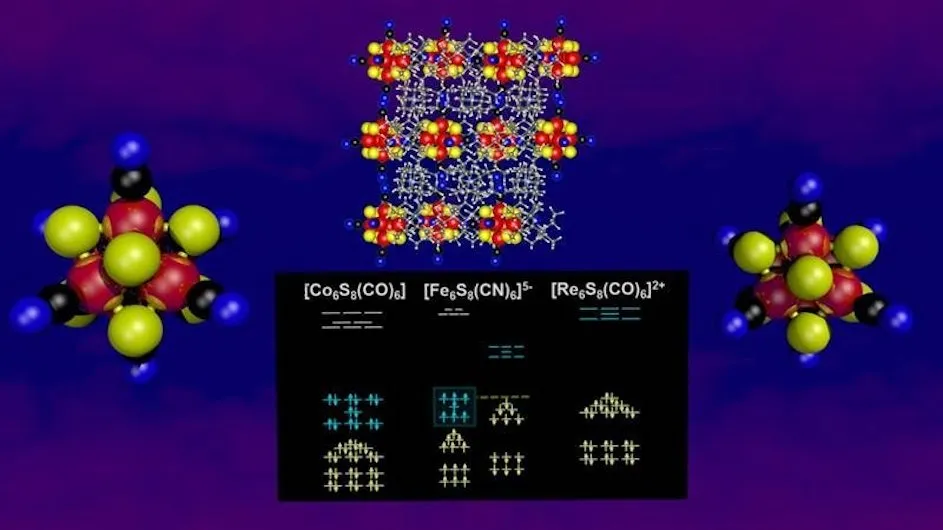
Researchers from Virginia Commonwealth University, Columbia University, and Harvard University detailed a new mechanism for the formation of magnetic moments in which the quantum confinement of electrons in clusters splits their electronic structures into distinct subshells with different spin directions and number of available orbitals.
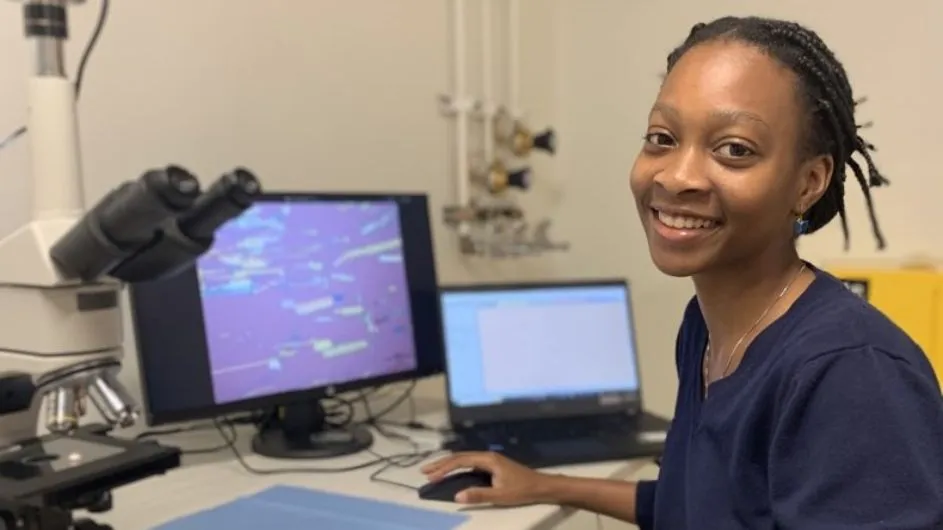
Through a NSF-funded Research Experience for Undergraduates program with Columbia’s Materials Research and Science Engineering Center on Precision-Assembled Quantum Materials, a visiting physics student spends time doing lab work on campus.

The physical chemist at Columbia and recent recipient of a Beckman Young Investigator Award builds instruments to image quantum particles as they move.

A team at Columbia University and the National University of Singapore finds a simple new way to describe the water-like movement of electrons in a novel type of semiconductor, which could pave the way for more efficient electronics.
Three computer scientists have posted a proof of the NLTS conjecture, showing that systems of entangled particles can remain difficult to analyze even away from extremes. Columbia Computer Scientist Henry Yuen comments.
The project, entitled “Topological Quantum Architectures Through DNA Programmable Molecular Lithography,” will span three years. U of M School of Physics and Astronomy Associate Professor Vlad Pribiag is collaborating with Columbia University Professor Oleg Gang, whose lab will handle the DNA nanoassembly part of the work.