
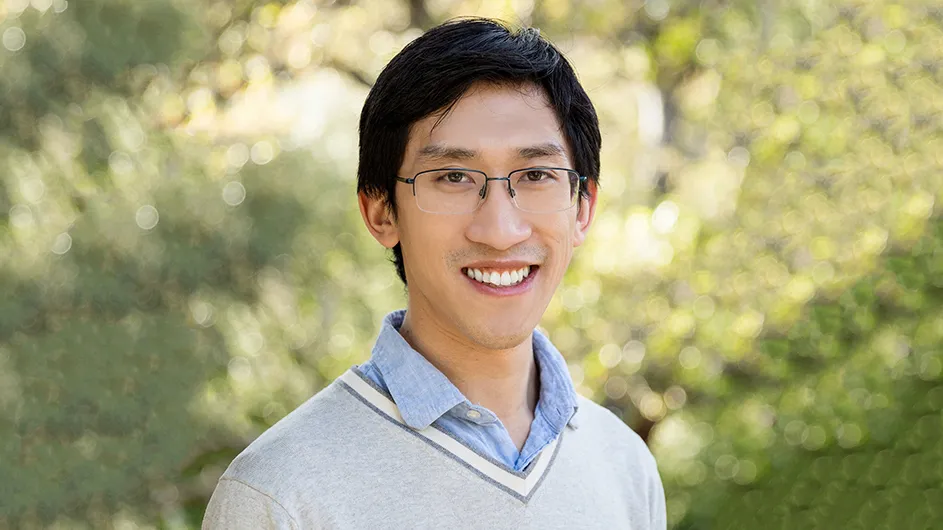
The theoretical computer scientist will use the award to push the boundaries of quantum information science.
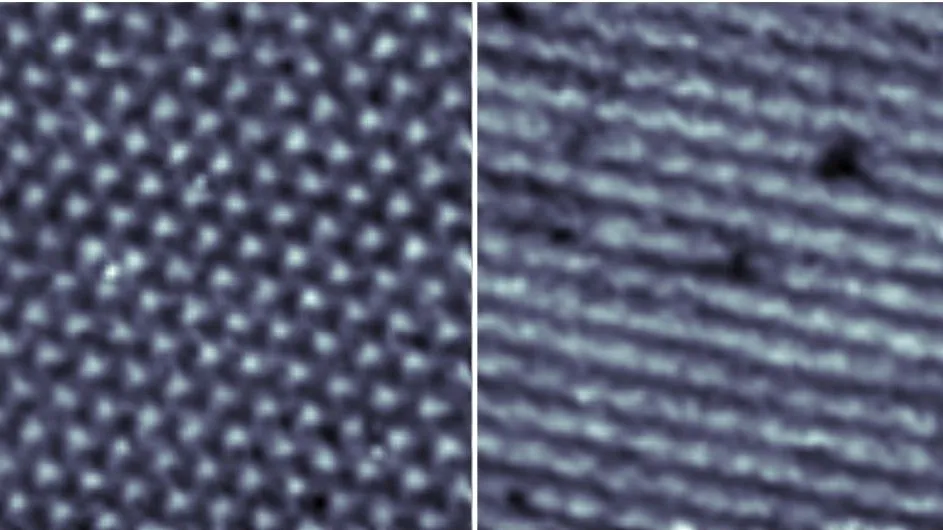
Abhay Pasupathy explains his recent discovery of a nematic phase in twisted double bilayer graphene to Phys.org.

Raquel Queiroz, a new assistant professor at Columbia, is setting her own rules as she explores the science of solid materials.
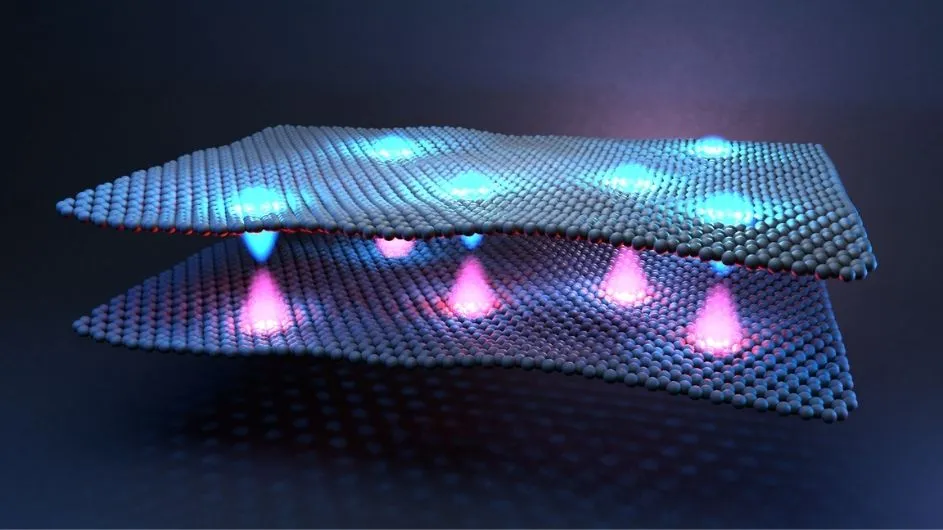
An adjustable platform made from atomically thin materials may help researchers figure out how to create a robust quantum condensate that can flow without dissipation
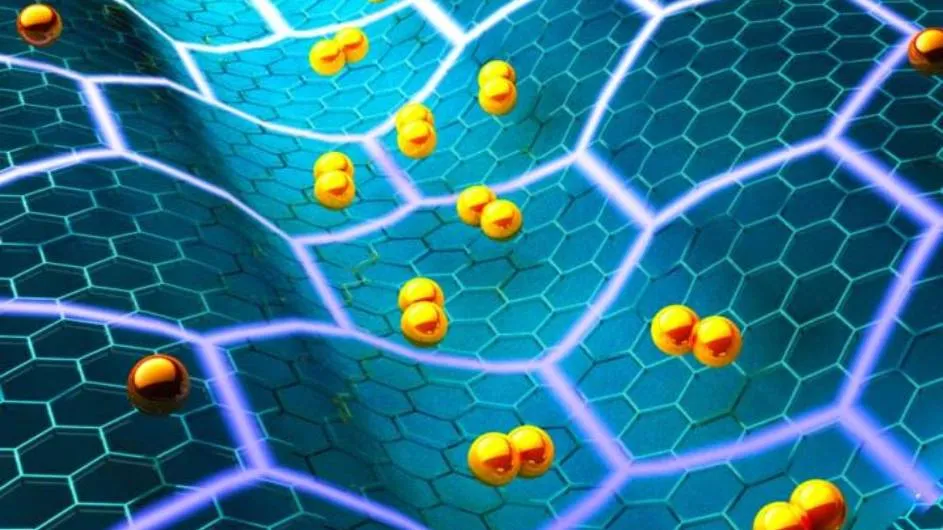
The ability to program desired properties into materials will be key for making quantum technologies work in the real world. At the Programmable Quantum Materials Energy Frontiers Research Center, researchers have come together to create quantum effects on demand
A team led by Columbia physicist Abhay Pasupathy sees stripes in samples of twisted double bilayer graphene, indicating the presence of a nematic phase characterized by broken rotational symmetry

With 2021 drawing to a close, Columbia physicists note the biggest quantum advances they saw last year and what may be coming as we head into 2022.
Six Columbia Quantum Initiative researchers joined Clarivate’s Highly Cited Researcher list this year. Here, we've compiled some highlights from 2021.
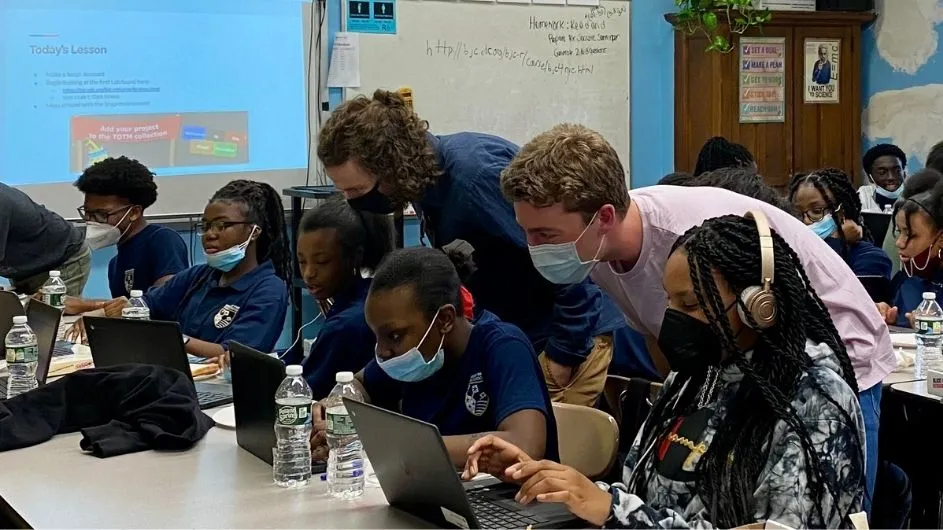
During the pandemic, a group of Columbia graduate students launched the Physics and Coding Club at Democracy Prep Harlem High School. A year later, they’ve left the virtual world of Zoom to gather in real rooms for the first time.
Scientists from Honda Research Institute USA, Inc. (HRI-US) have synthesized atomically thin “nanoribbons” – atomic-scale thickness, ribbon-shaped materials – that have broad implications for the future of quantum electronics, the area of physics dealing with the effects of quantum mechanics on the behavior of electrons in matter.

Using 2D materials, researchers have built superconducting qubits that are a fraction of previous sizes, paving the way for smaller quantum computers.
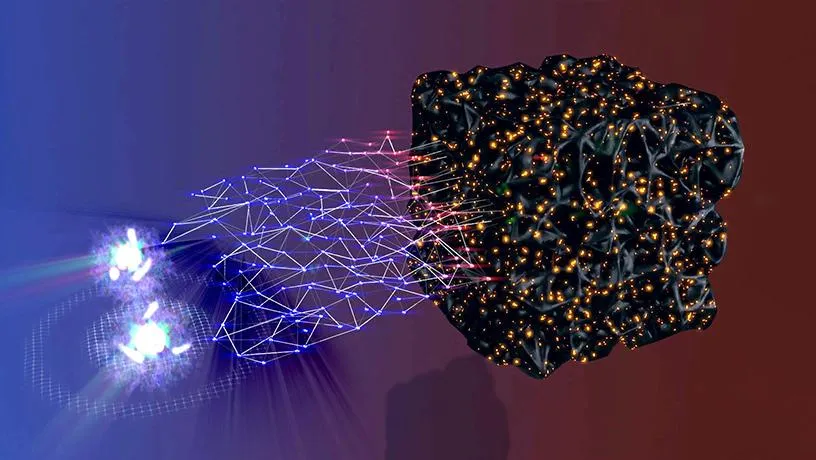
Columbia engineers invent method that combines quantum mechanics with machine learning to accurately predict oxide reactions at high temperatures when no experimental data is available; could be used to design clean carbon-neutral processes for steel production and metal recycling.