
Physics World covers a recent Nature publication from the Basov Lab.

Cory Dean is quoted in Quanta about new results regarding superconductivity
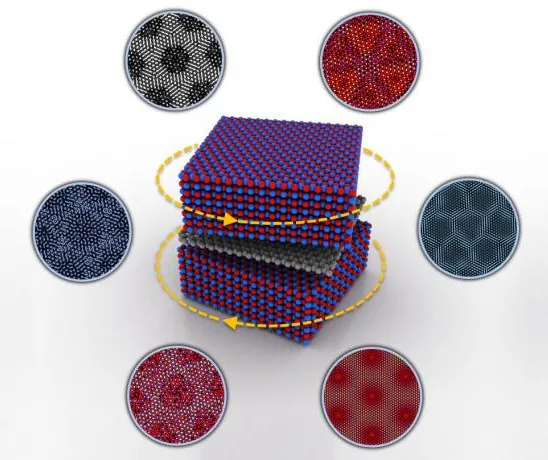
Columbia researchers engineer first technique to exploit the tunable symmetry of 2D materials for nonlinear optical applications, including laser, optical spectroscopy, imaging, and metrology systems, as well as next-generation optical quantum information processing and computing
The theoretical physicist studying quantum optics joins three other Columbians being recognized for outstanding contributions to their field with a $75,000 Sloan Research Fellowship.

Chien-Shiung Wu’s pioneering work altered the way scientists view the structure of the universe.

Columbia researchers discover a new way to program light on an ultra-small scale

Researchers at Columbia Engineering report today that they have developed the first nanomaterial that demonstrates "photon avalanching," a process that is unrivaled in its combination of extreme nonlinear optical behavior and efficiency.
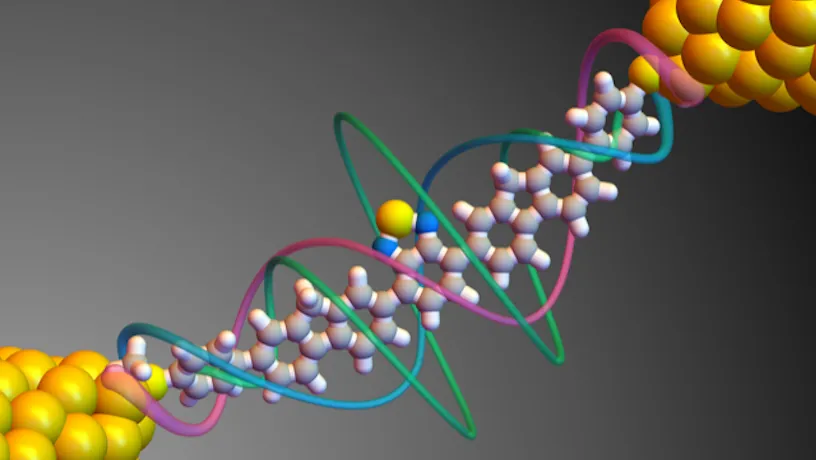
Columbia team discovers 6nm-long single-molecule circuit with enormous on/off ratio due to quantum interference; finding could enable faster, smaller, and more energy-efficient devices
Columbia researchers have successfully re-competed for the highly competitive Materials Research Science and Engineering Center (MRSEC) program, sponsored by the National Science Foundation (NSF). Columbia’s MRSEC, the Center for Precision-Assembled Quantum Materials (PAQM), will receive $18 million over the next six years to support cutting-edge research into new quantum materials, in which clear effects of quantum mechanics emerge in macroscopic systems.
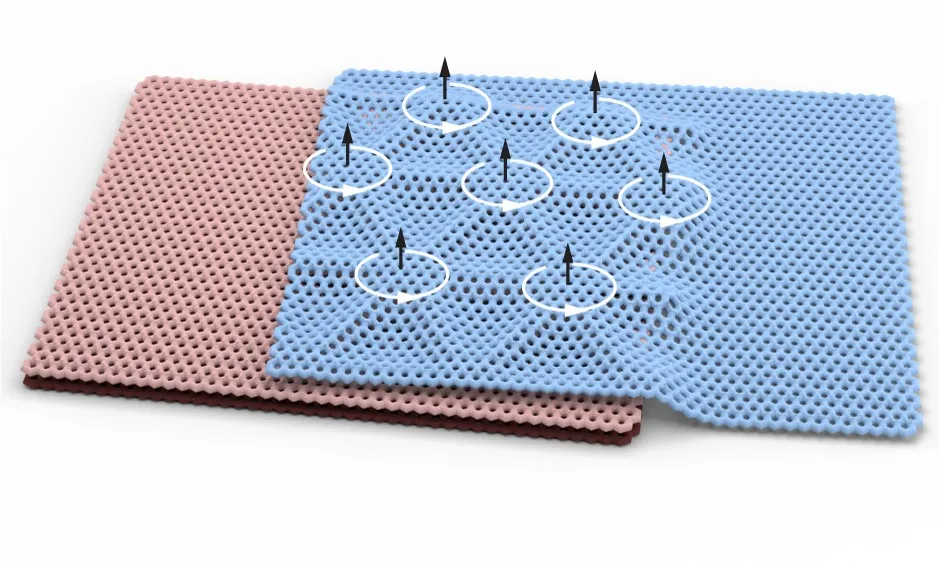
Twisting a monolayer and a bilayer sheet of graphene into a three-layer structure leads to new quantum mechanical states.