
Experiments conducted at Montana State University in collaboration with Columbia University and the Honda Research Institute have resulted in the emission of single photons of light in a new type of quantum material — a feat that could lead to the development of controllable light sources for use in quantum technologies.
Two independent teams in the US have demonstrated the potential of using the optical properties of nanocrystals to create remote sensors that measure tiny forces on tiny length scales.
A double layer of tungsten diselenide behaves as a superconductor at very low temperatures, which could suggest a new route to developing materials that do so at room temperature.
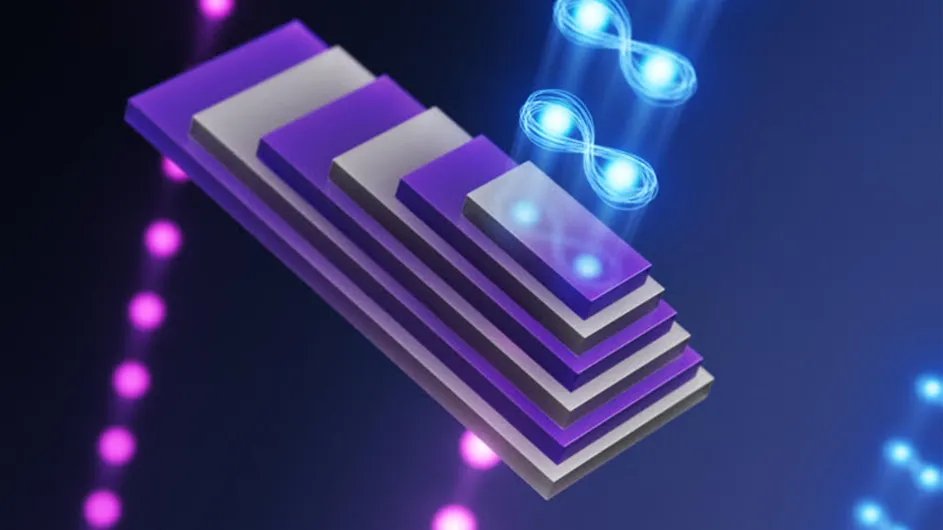
Researchers have developed a drastically smaller and more energy efficient method of creating coveted photon pairs that influence each other from any distance. The technology could transform computing, telecommunications, and sensing.
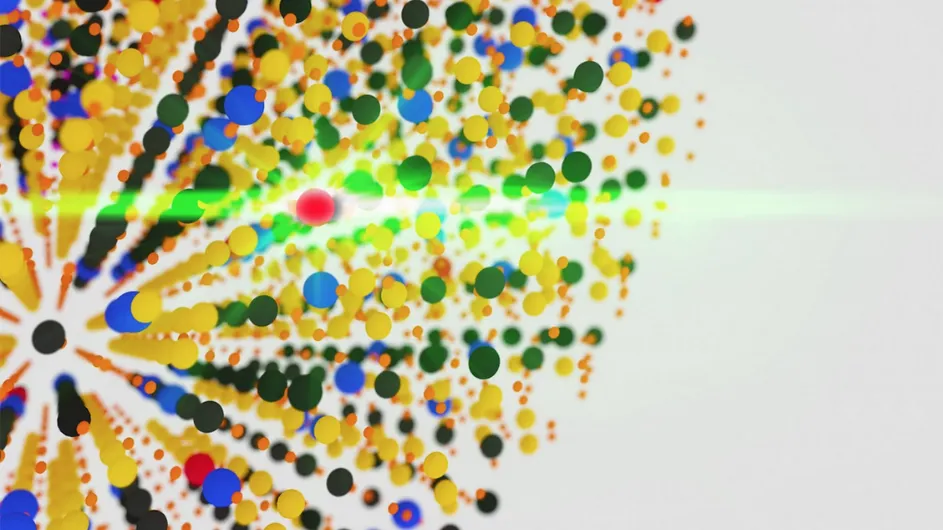
Photon-avalanching nanosensors access previously unreachable environments and could disrupt technologies from robotics to cellular biophysics and medicine to space travel.
Three new species of superconductivity were spotted this year, illustrating the myriad ways electrons can join together to form a frictionless quantum soup.
The Department of Applied Physics and Applied Mathematics will welcome Michele Simoncelli and XueYue (Sherry) Zhang as tenure-track assistant professors in January.
The quasiparticle, called a semi-Dirac fermion, was first theorized 16 years ago, but was only recently spotted inside a crystal of semi-metal material called ZrSiS.

Computer Science PhD student Natalie Parham on finding the power of quantum computing, and community, at Columbia.

Inside a hunk of a material called a semimetal, scientists have uncovered signatures of bizarre particles that sometimes move like they have no mass, but at other times move just like a very massive particle.
A Columbia Engineering startup nabs $44M to tackle energy and scalability challenges with a new platform that significantly boosts AI data performance and efficiency.