
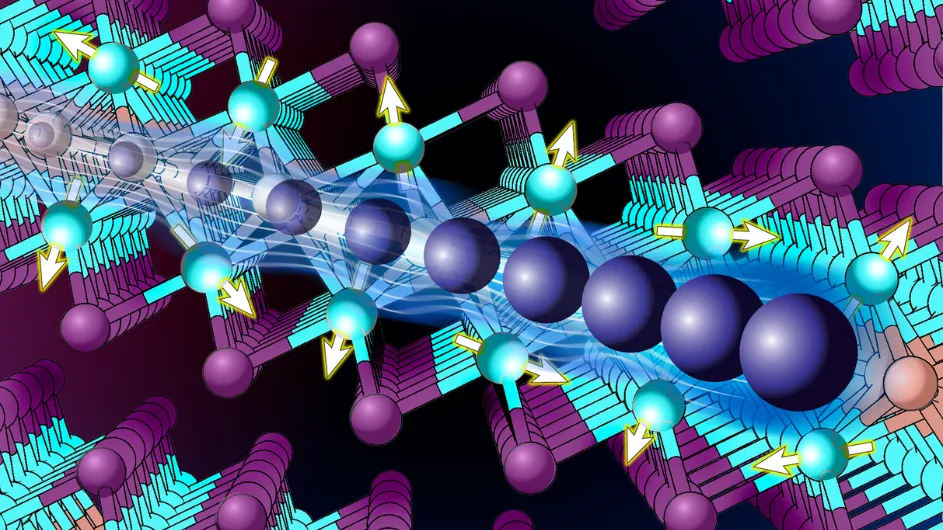
The 2D material cerium silicon iodide contains the same heavy electrons responsible for heavy fermion physics, something so far seen only in 3D materials.
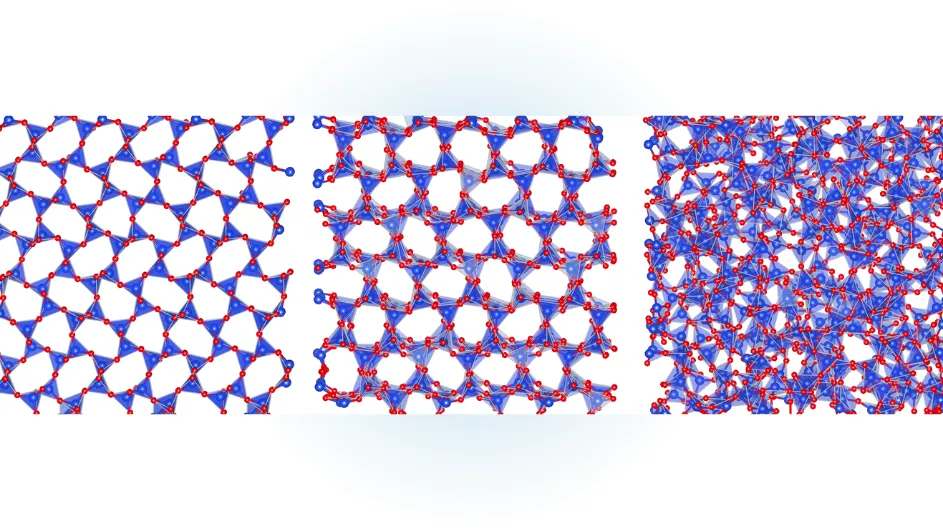
Michele Simoncelli combines a first-principles approach with machine learning to identify a unique material with distinctive thermal properties.
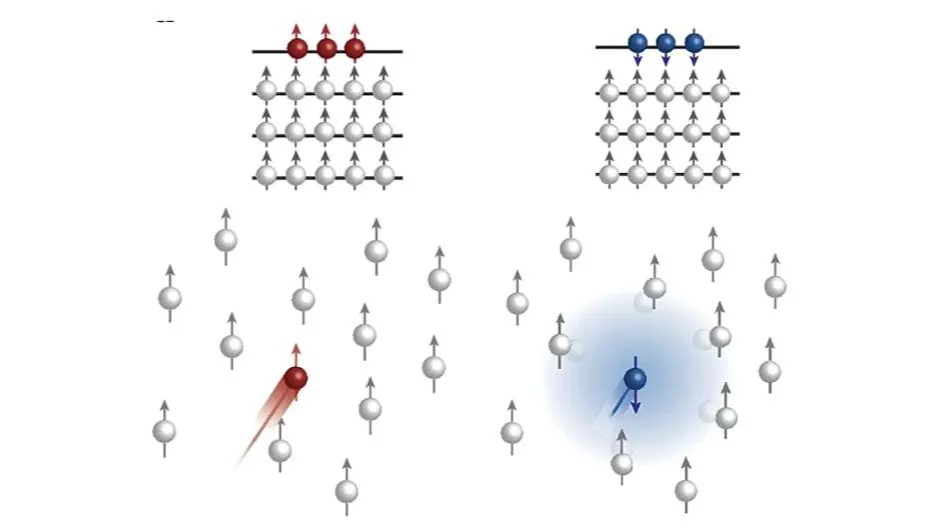
Phys.org talks to physicist Cory Dean and his postdocs En-Min Shih and Qianhui Shi about their recent publication in Nature Physics.
Chemists Xavier Roy and Daniel Chica contribute to new research in Science about utilizing antiferromagnets for new technologies.
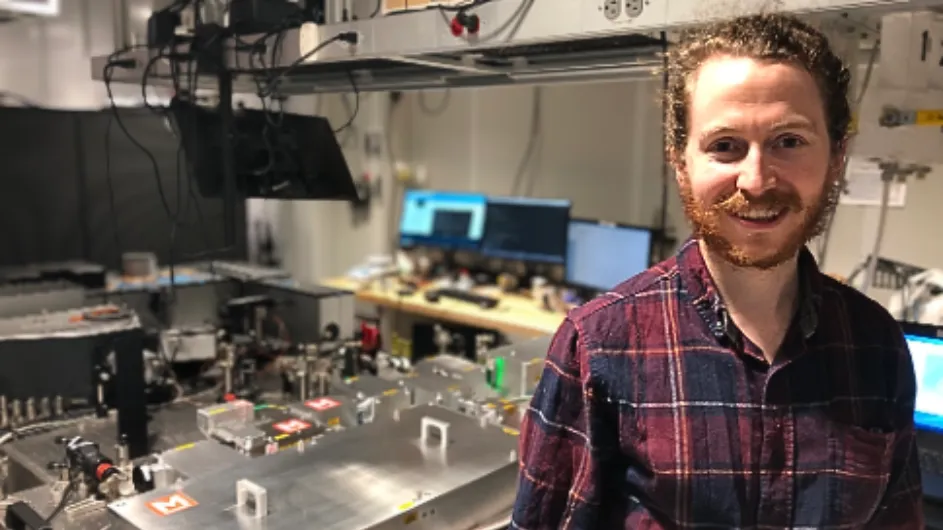
Columbia postdoc Samuel Moore explains his recent research on waveguides in 2D materials, published last month in Nature Photonics.
Broadband terahertz emission from a two-dimensional van der Waals ferroelectric semiconductor, NbOI2, offers opportunities towards nanoscale near-field terahertz spectroscopy and in situ probing of quantum collective excitations in two-dimensional materials.
Suraj Chandran received a prestigious Hertz fellowship this year for his research probing novel quantum regimes of chemical dynamics and the development of efficient, sustainable energy conversion systems.
Columbia Engineering Assistant Professor Sherry Zhang is working on new approaches to enhance quantum computing performance.
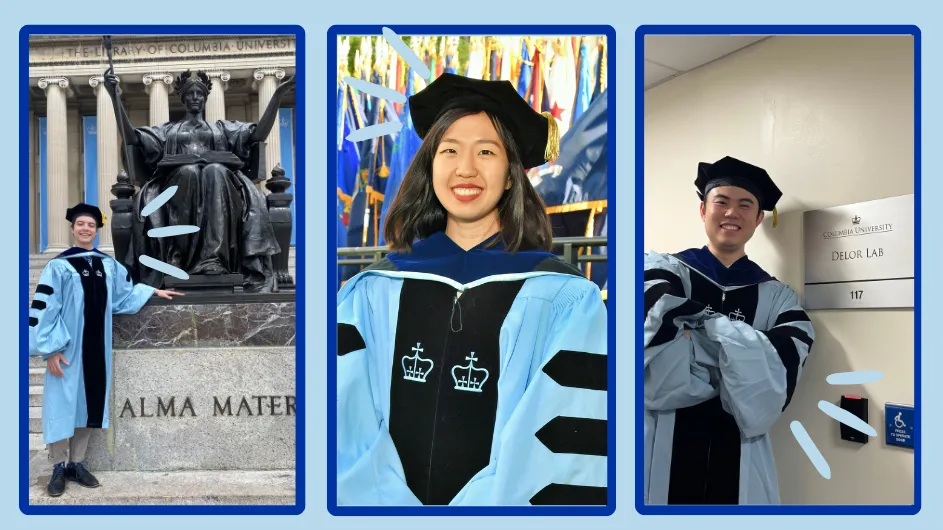
PhD students Morgan Thinel, Valerie Hsieh, and Ding Xu share highlights from their research at Columbia and their time in New York.
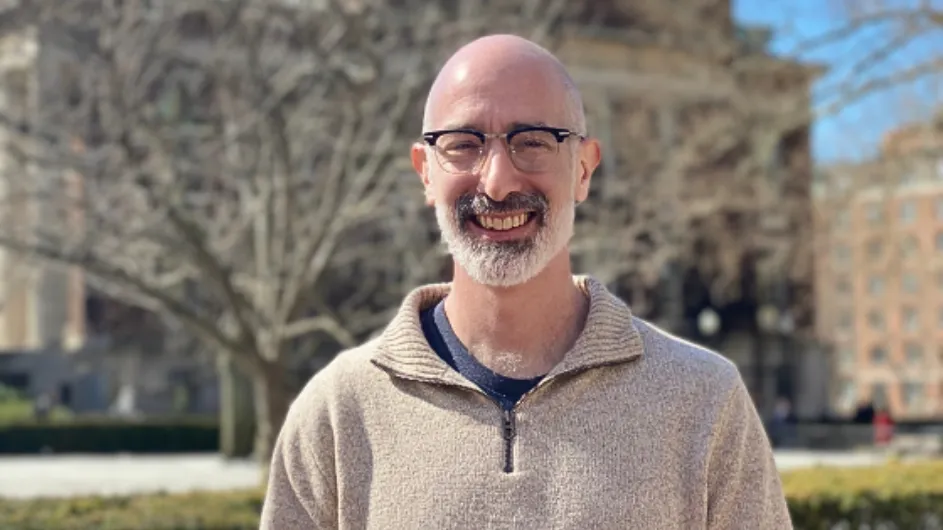
Theoretical chemist David Reichman, recently elected to the National Academy of Sciences, is making sense of experimental findings.
At the BRITE ’25 conference, Henry Yuen (Srivani Family Associate Professor of Computer Science, Columbia University) broke down and shared his insights on the pace of advancement of quantum computing and what it will likely impact in the future and what it won’t.
The 2022 Arnold O. Beckman Postdoctoral Fellow shares more about his research and the AOB Postdoc experience under the mentorship of Dr. David Reichman.