
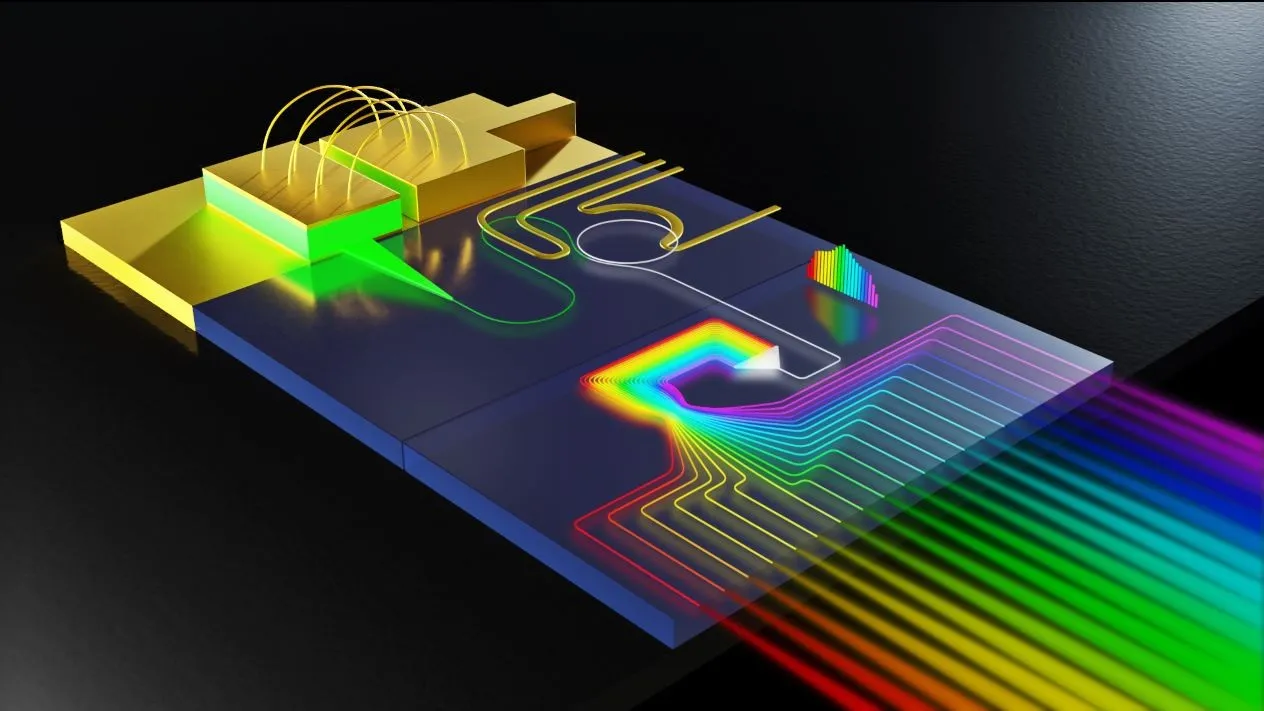
Researchers at Columbia Engineering have developed a compact light source that generates dozens of high-power wavelengths, paving the way for a new generation of data center hardware and portable sensing technologies.

She is one of twelve early-career quantum researchers awarded for their work that moves the field of quantum information science and engineering in new directions
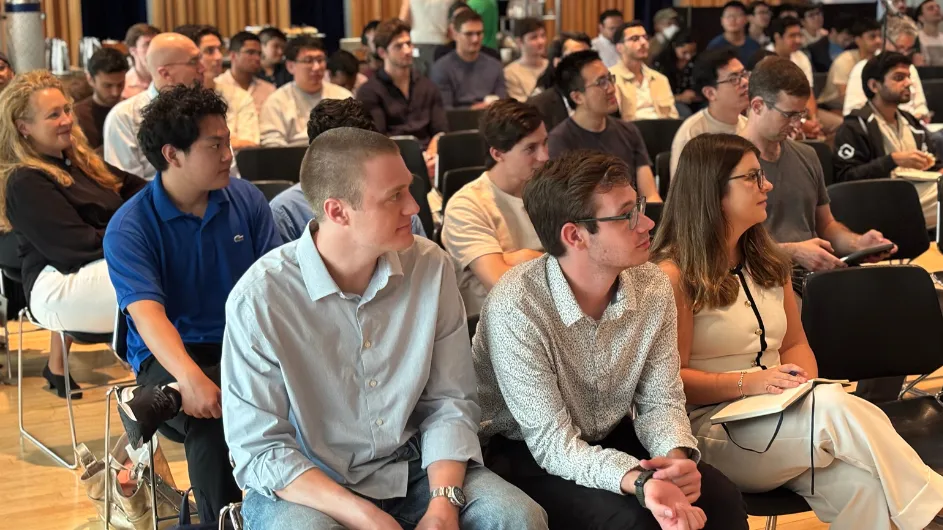
On September 19, Columbia welcomed speakers from industry and academia to share the latest news and innovations from the hundred-year-old field.
Researchers supported by the DOE EFRC on Programmable Quantum Materials introduce bolometric superconducting optical nanoscopy (BOSON).
Grant Includes Collaboration with the Brookhaven National Laboratory, Columbia University, and Yale University

A three-year, three-million-dollar award from the National Science Foundation and Air Force Research Laboratory will support efforts to shrink Floquet-engineered quantum systems.
At Columbia University, quantum breakthroughs emerge from a culture of shared labs, ideas, and materials. What began as informal collaboration has become a scalable model for cross-disciplinary science that powers advances in programmable quantum systems

Atomic orbitals, not just crystal lattices, can yield frustrated materials with quantum results

The Columbia Quantum Initiative Postdoctoral Fellow shares her path from Costa Rica to Columbia and her interest in unique optical materials
The Max Planck-New York Center for Nonequilibrium Quantum Phenomena is pushing the boundaries of modern materials science.

The Marie Skłodowska-Curie Global Fellow, working with mechanical engineer Jim Schuck, will compete in the global competition in Berlin in November.