
In experiments published in Nature, a team led by Itai Keren at Columbia University show how quantum properties can be deliberately engineered by bonding carefully chosen materials together.
A new layered material enabled researchers to document a dramatic change in metallic electron behavior as the material goes from 3D to 2D.
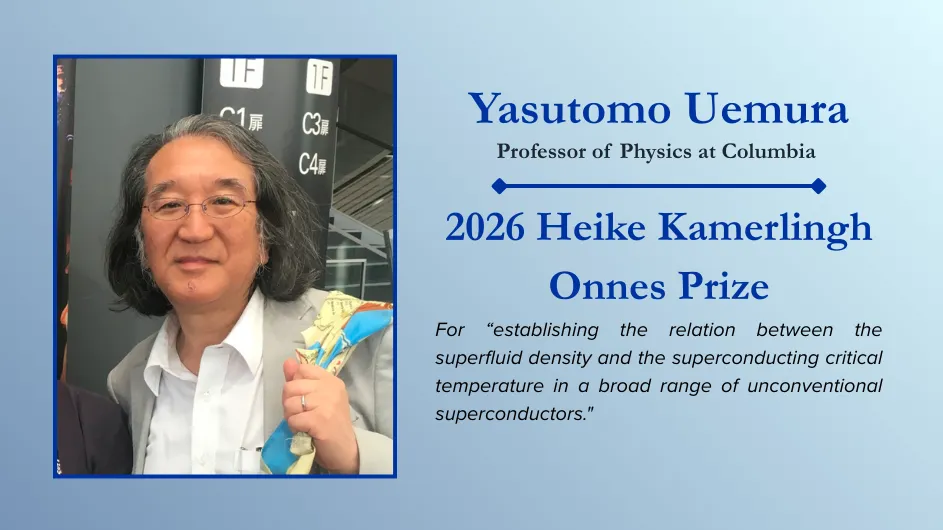
The award recognizes his experimental contributions to understanding superconductivity
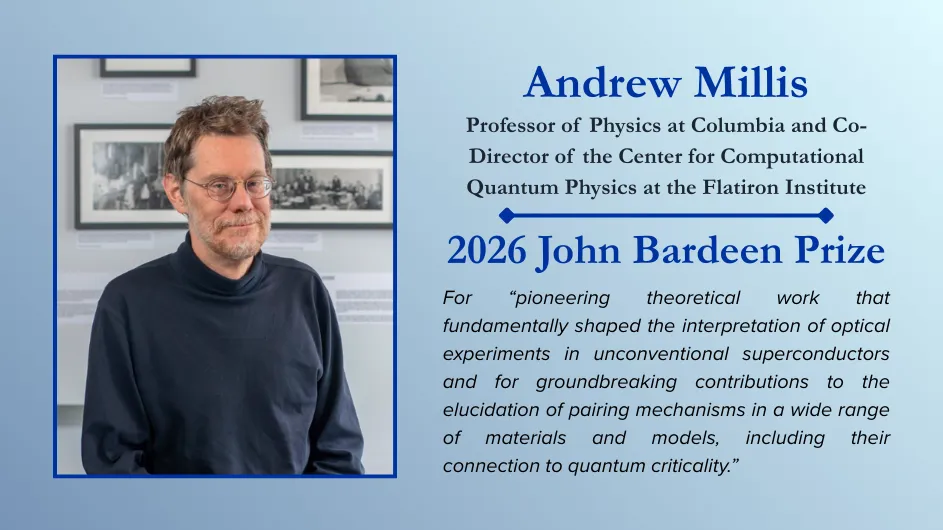
The award recognizes his theoretical contributions to understanding superconductivity
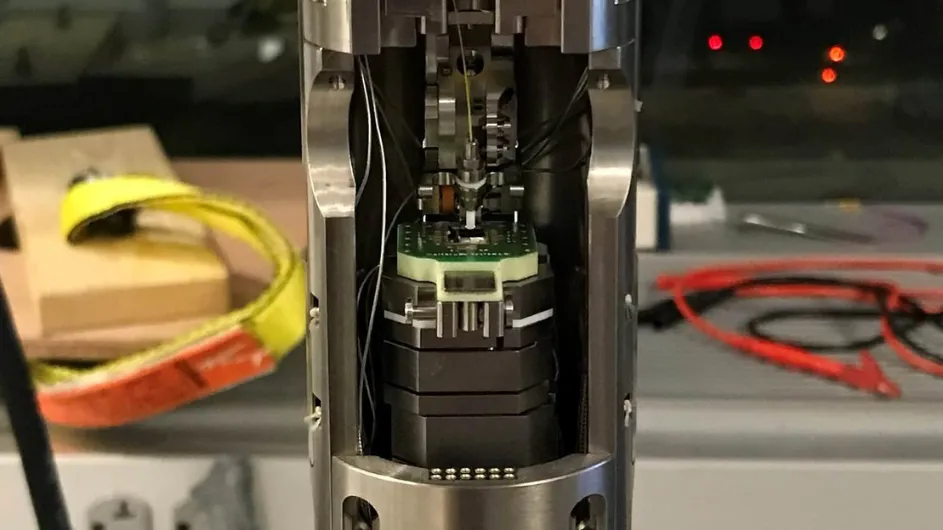
Physics World covers recent work on cavity-altered superconductivity led by Dmitri Basov.

Researchers confirm that quantum fluctuations from the vacuum of a 2D material can drastically change the properties of a nearby crystal

The fellowships recognize “exceptional researchers at U.S. and Canadian educational institutions, whose creativity, innovation, and research accomplishments make them stand out as the next generation of leaders.”

Traditional complexity theory can’t accommodate problems with quantum inputs and outputs. Henry Yuen wants to build a new theory that can.
Popular Mechanics covers Cory Dean's new evidence of a supersolid forming in graphene.

Quanta covers the most dramatic recent demonstration of an electron fluid, led by Cory Dean's lab at Columbia
A new way of creating arrays of ultracold neutral atoms could make it possible to build quantum computers with more than 100,000 quantum bits (qubits) – two orders of magnitude higher than today’s best machines

Q&A with 2026 Optica Ambassador and Columbia postdoc Sai Kanth Dacha