
Columbia Physicist Sebastian Will Named 2026 APS Fellow
The American Physical Society honors Will for creating the first molecular Bose-Einstein condensate.
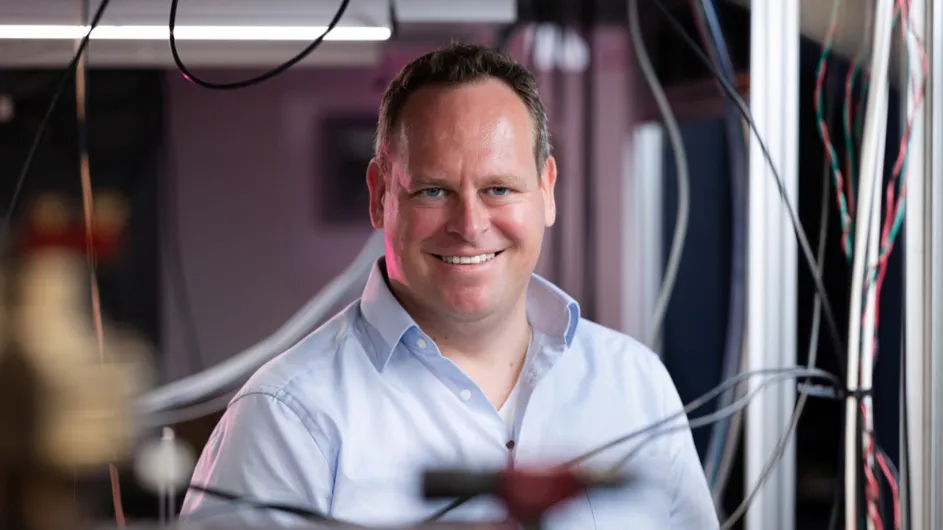
Columbia physicist Sebastian Will has been selected by the American Physical Society (APS) as a 2026 APS Fellow, an honor recognizing APS members for their contributions to physics. Will was recommended for the honor by the APS Division of Atomic, Molecular, and Optical Physics, and his citation reads:
For the realization of a Bose-Einstein condensate of dipolar molecules and the development of microwave shielding, enabling strongly interacting ultracold molecular gases.
Bose-Einstein condensates (BECs) are a unique form of quantum matter in which individual particles come together to act as a single coherent quantum wave. First proposed by physicists Satyendra Nath Bose and Albert Einstein just over a century ago, BECs were first realized with ultracold atoms in 1995. In 2024, Will and his team created the first molecular BEC, opening a new frontier in quantum physics. Unlike atoms, molecules possess a rich internal structure and interact strongly over relatively long distances via dipolar interactions, offering new opportunities to explore exotic forms of quantum matter.
To create molecular BECs, Will and his team developed microwave shielding, a technique that protects molecules from lossy collisions and enables them to be cooled to temperatures of just a few billionths of a degree above absolute zero. The technique also provides unprecedented control over the interactions between molecules. Building on these advances, Will and his team have observed self-bound quantum droplets of molecules and, most recently, realized ultrastable ultracold molecular gases, paving the way for exploring new regimes of strongly interacting quantum matter.
“It’s a tremendous honor to be recognized by the APS,” says Will. “These breakthroughs were made possible by the creativity, dedication, and hard work of our outstanding team of students and researchers—this is also a recognition for them. I am truly grateful for all the excitement in the scientific community for our work, and I can’t wait to see all the new scientific opportunities that molecular quantum gases are opening up.”
Image Carousel with 4 slides
A carousel is a rotating set of images. Use the previous and next buttons to change the displayed slide
-
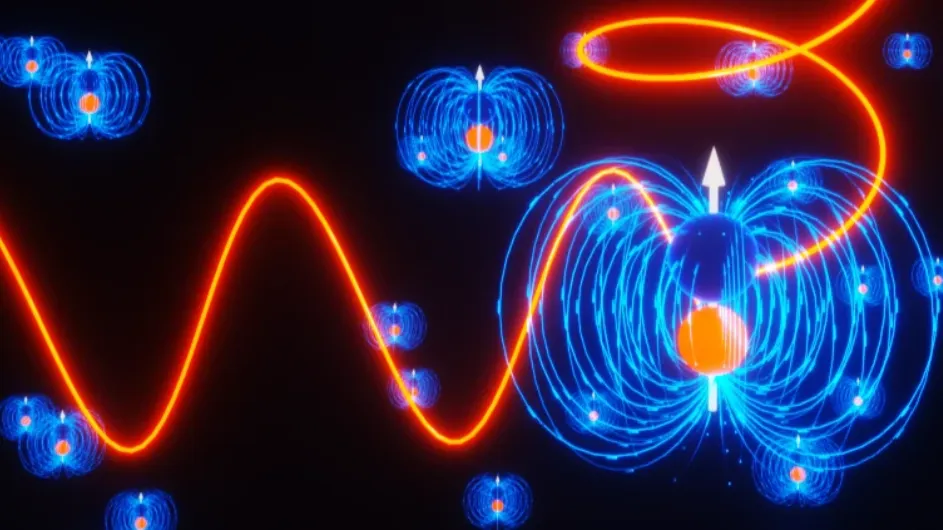
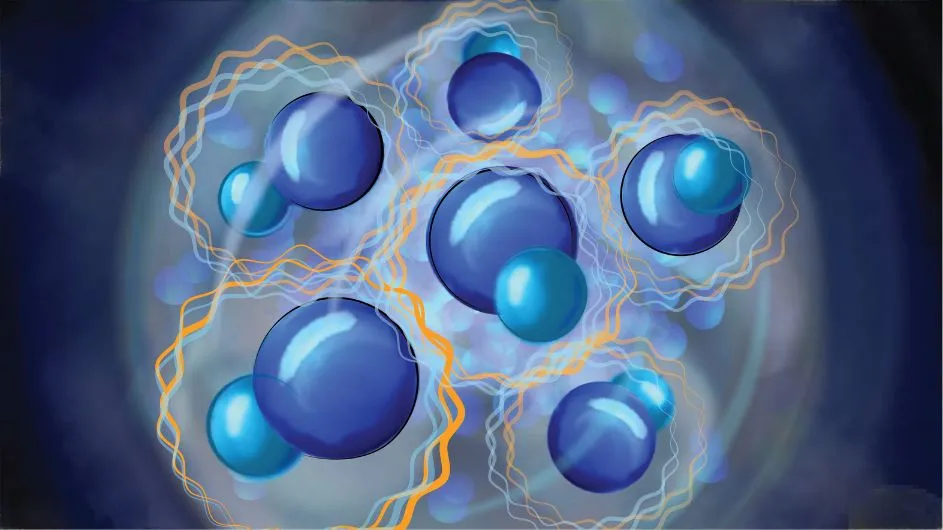
Slide 1: Illustration of an ultrastable dipolar gas
-
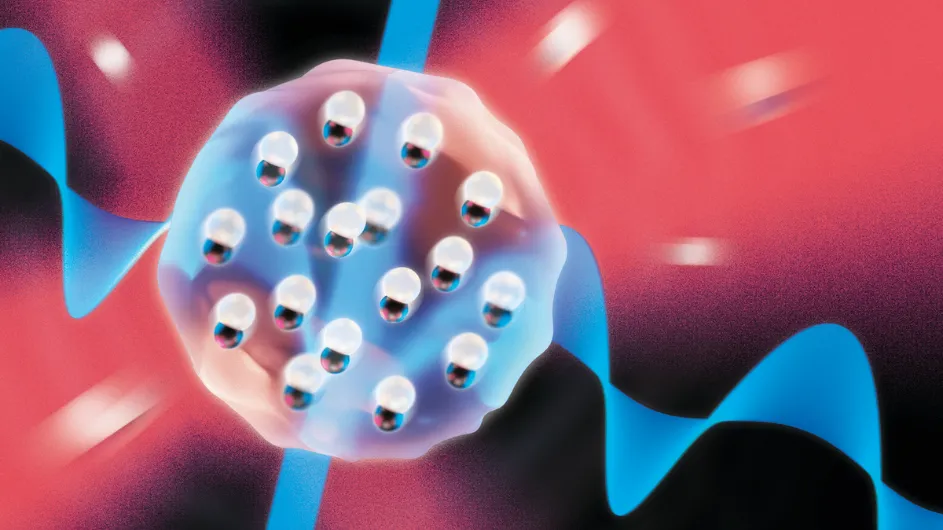
Slide 2: Illustration of the first molecular BEC
-
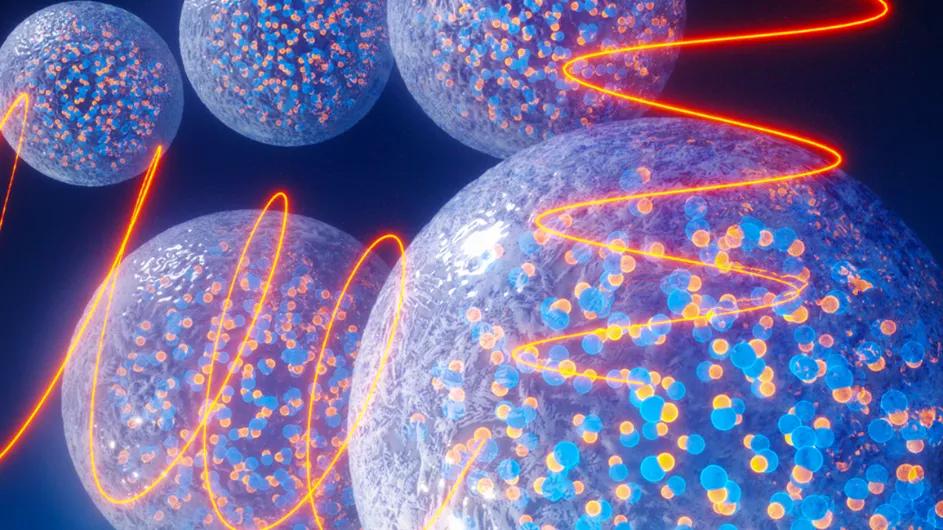
Slide 3: Illustration of molecular droplets
-
Slide 4: Illustration of an ultracold bosonic gas
Read the Research Behind Will's Honor:
- Weijun Yuan et al. Extreme loss suppression in an ultracold molecular gas with widely tunable dipolar interactions. Science 2026. DOI: 10.1126/science.adz0521
- Siwei Zhang et al. Observation of self-bound droplets of ultracold dipolar molecules. Nature (2026). DOI: 10.1038/s41586-026-10245-9
- Niccolò Bigagli et al. Observation of Bose-Einstein condensation of dipolar molecules. Nature 2024. DOI: 10.1038/s41586-024-07492-z
- Niccolò Bigagli et al. Collisionally stable gas of bosonic dipolar ground state molecules. Nature Physics (2023). DOI: 10.1038/s41567-023-02200-6